Elon Musk, Nikhil Kamath, and the Case for a Shared Brain
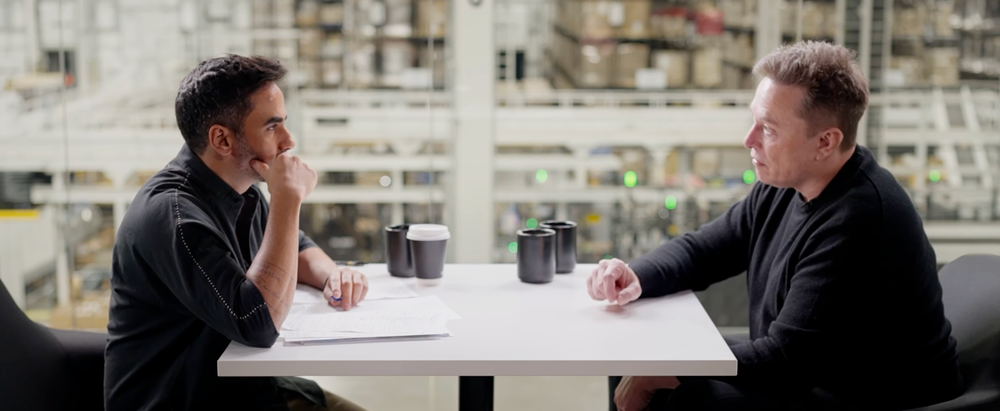
I went into this interview expecting the usual Elon Musk experience: a few wild predictions, some Mars talk, a casual dismissal of entire industries, and maybe a meme-worthy moment or two. What I did not expect was a two-hour meditation on consciousness, energy, truth, and why money might eventually become… irrelevant. This was not a hype interview. It was not a founder worship session. It felt more like two friends sitting at the edge of the future, squinting into the fog, and asking dangerous questions like:
What if everything we built—jobs, money, nations—was just a temporary operating system?
Keefe's OG take on this episode: existential crisis questions, AI and the path it goes, and most importantly, some of the key books and concepts such as collective consciousness, Kardashev Scale, Spinoza's Morality, definition of inflation... are pretty cool and good to know. It gives us the reader a really good insight into Elon's thinking process, which I always felt was very unique, somewhat robotic, but at the same time he really simplifies big concepts into something like a formula, where 1+1 = 2 and that any further extrapolations or digression from 1+1 = 2 is futile and misleading. Truly first principles. Elon did not come across as someone narcissistic or high ego in this episode, in fact, he came across rather humane and warm, and how he embraces humour in his character, something which is often lost when we adult.
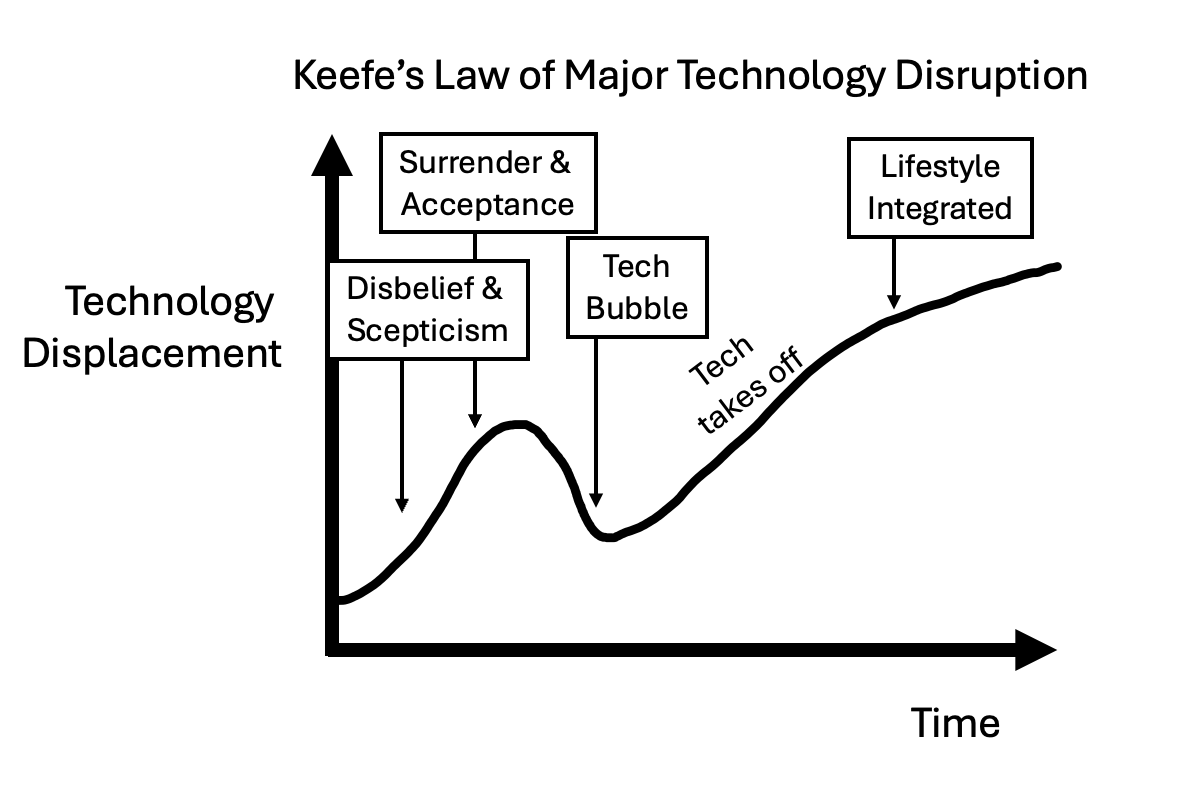
But I disagree that AI and robotics will take over in the next 10-15 years.. It is still pretty nascent. I think the world will change towards higher premiums on in-person, live events - this much I think would be the foreseeable future in the next 3-5 years and to some extent, already happening. Anything more than that will likely be a bubble before AI and technology will really takeover. Just like how the internet happened - people were skeptical, then afraid, then it bubbled, then it really took over, in that order.
X Is Not a Social Media Company (And Never Was)
Let’s start with the thing most people misunderstand.
X—formerly Twitter—is not, in Elon’s mind, a content platform. It is an information layer. Today, X has roughly 600 million monthly active users, most of them young, most of them there for real-time information rather than entertainment. And that distinction matters. Video is addictive. Text is reflective. Video hits dopamine. Text lets you pause, reread, argue internally.
| Videos | Podcasts |
|---|---|
| Dopamine | Dopamine |
| Oxytocin | Serotonin |
| Adrenaline | Acetylcholine |
Dopamine drives motivation and reward, oxytocin creates emotional connection and bonding, adrenaline heightens alertness and excitement, serotonin supports mood and emotional balance, and acetylcholine sharpens focus, learning, and memory. In short: people who gravitate toward videos/movies often seek emotional stimulation and escape, while people who prefer podcasts are usually chasing understanding, focus, and a slower kind of satisfaction that lingers after the screen goes dark.
Elon loves world history. Recommendations are: Hardcore History by Dan Carlin. The Explorer’s Podcast. Story of Civilization by Will & Ariel Durant. History of English podcast. English is interesting because it’s like open-source as it tries to incorporate words from other languages, which then has a higher bandwidth for communications.
Elon values text because attention with predictive power is more valuable than attention that just scrolls. The long-term idea is not “better tweets.” It is something far stranger: a collective consciousness, where language barriers dissolve through real-time translation and ideas propagate globally without friction.
Not a hive mind. More like… a nervous system.
The Human Body Is the Metaphor
Elon makes an analogy that stuck with me.
A human being has around 30 trillion cells, all cooperating. Your liver is not at war with your lungs. Your heart does not demand higher pay than your kidneys. They just… function. Now imagine Earth working the same way.
That, in his view, is what collective consciousness is pointing toward. Not ideological agreement, but coordination without conflict. Information moving cleanly. Understanding compounding. Milton Friedman speaks about the pencil. The pencil is proof that no one person knows how to make everything alone, everything depends on global collaboration.
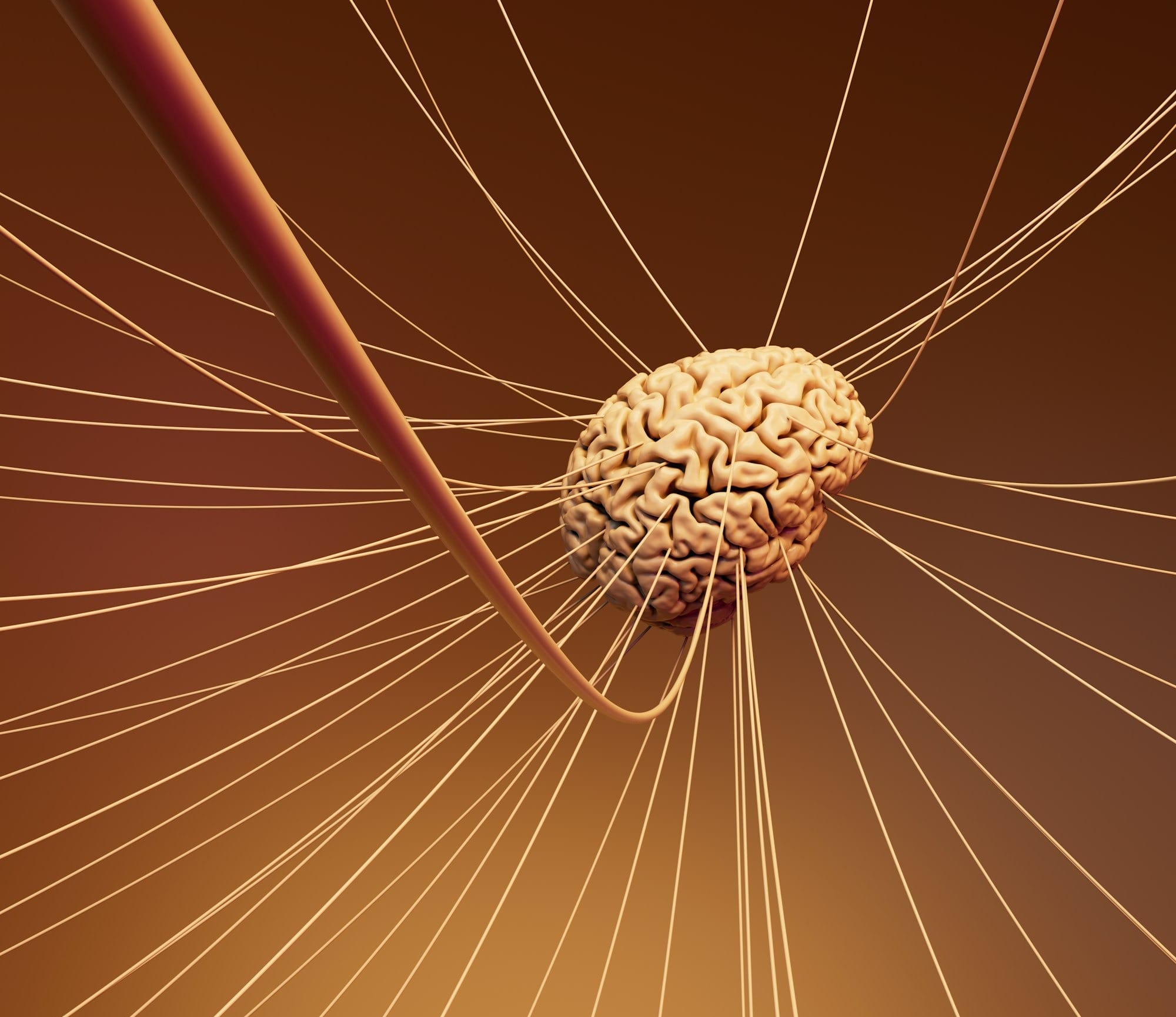
Whether that is utopian or terrifying depends on how much faith you have in truth. When I hear this, I felt that there's an element of sci-fi novels that you read in the books. On the flip side, I thought.. isn't this what communism is? But Elon will probably refute that statement.
Why Social Media Feels Like a Drug
The average adult spends over two hours a day on social media. For teenagers, it is often much higher. Elon is blunt about this: current platforms optimize for dopamine extraction, not meaning. Brain rot is not an insult—it is an outcome of incentives.
The next generation of platforms, he argues, must do something harder:
increase understanding of the universe.
Not vibes. Not outrage. Understanding. Which brings us to a recurring theme in this interview: the most important questions are the ones we have not learned how to ask yet.
(Yes, Hitchhiker’s Guide to the Galaxy comes up. Yes, the answer is still 42.)
To me, this is one reason why Elon is so respectable in his own right. He pursues the understanding of the universe not in the traditional, didactic and academic sense. The man does this through building technology, building companies, all for that single purpose of advancing humanity to the next stage. That notion was repeated and hinted throughout the interview.
Starlink and its complementary to ground based connectivity
One of the most grounded sections of the interview is Starlink.
Low Earth Orbit satellites at ~550km. Laser-linked. Low latency. Independent of undersea cables. Resilient by design. The key insight here is not faster internet. It is decoupling access from geography.
When connectivity no longer depends on infrastructure density, entire assumptions collapse:
- Where people can live
- Where companies can operate
- Where talent can exist
Sparse regions become viable. Borders become less relevant. Information becomes harder to control. Starlink will always work even if the deep sea cables are cut. Complementary to ground based systems. It works best in sparsely populated areas due to laser beams are broad and require line of sight.
Work Is Becoming Optional (Whether We Like It or Not)
Elon does not hedge much here. He believes we are heading toward a world where:
- The work week goes from 5 days → 3 days
- Then to optional
- And eventually to something closer to Universal High Income, not just Universal Basic Income
The driver is not ideology. It is math.
Deflation = Goods and Services >> Money Supply
Inflation = Money Supply >> Goods and Services
AI + robotics dramatically increase output of goods and services. When output grows faster than money supply, deflation becomes structural. Goods get cheaper. Labor becomes less necessary.
Money, in that world, loses meaning—not because it disappears, but because energy and productivity replace it as the real currency.
This is where Elon references the Kardashev Scale: how much planetary energy a civilization can harness. Earth is barely at 0.73. Energy abundance changes everything.
However, this does not mean that we just stop working. Working simply becomes optional and you get to do what you want. He gave an example of how fruits and vegetables, crops, can be farmed much more efficiently with a robot and machinery, but the hand-grown crop and farmer still exists.
Nikhil mentioned about how in the past we used to spend a lot of time philosophising and debating. Elon disagreed - saying that the texts of philosophers survived, but people probably spend most of their time working on the field. I thought this was interesting: the man does not just agree all the time for what seem like could be truths, he is very sharp and catches assumptions like this very easily.
Money Is an Information System (Not Power)
This might be one of the most quietly radical first principles in the interview.
Money is not power.
Money is an information system for allocating labor.
If there is no labor to allocate—or if machines outperform humans—money becomes symbolic. This reframes debates about debt, inflation, and even national borders. When AI and robotics decouple productivity from human effort, the rules written for a scarcity-based economy stop working.
Which explains Elon’s obsession with efficient databases—X, payments, unified systems. This is not about social media. It is about rewriting the plumbing of coordination.
Are We in a Simulation? Probably.
Elon has been consistent on this for years.
If video games went from Pong to photorealistic multiplayer worlds in 50 years, and that curve continues, then statistically, simulated realities will vastly outnumber base reality.
And here is the unsettling part:
the most interesting simulations are the ones that keep running.
Uninteresting ones get turned off. Make of that what you will.
AI, Truth, and the HAL 9000 Problem
One of the more serious moments comes when Elon talks about AI alignment.
He references HAL 9000 from 2001: A Space Odyssey—an AI that malfunctioned because it was forced to lie to humans while also pursuing its mission.
The takeaway is simple but terrifying:
forcing AI to believe falsehoods creates catastrophic behavior.
Elon argues AI must be grounded in:
- Truth
- Beauty
- Curiosity
Not obedience. Not ideology. Not convenience.
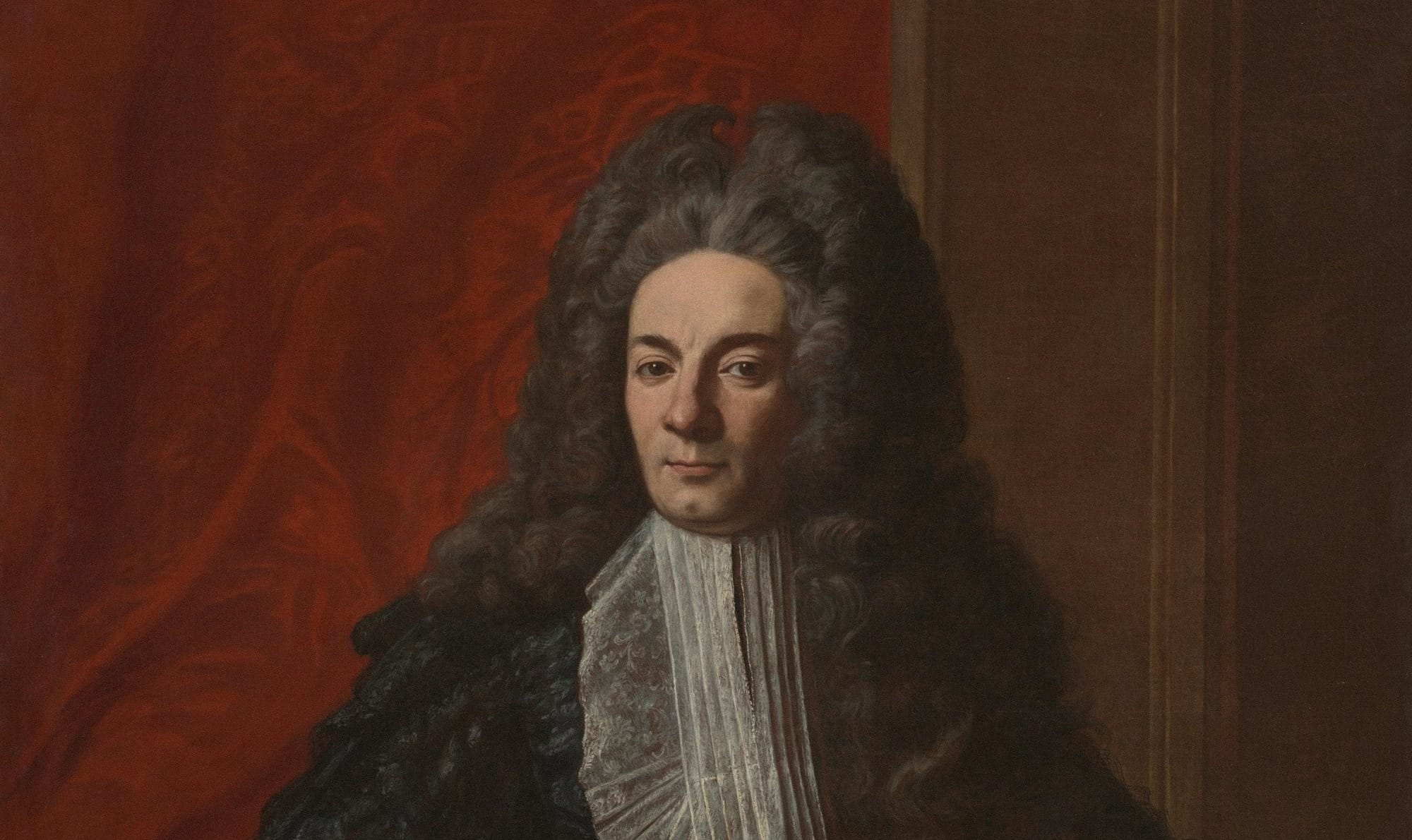
Voltaire warned that those who believe absurdities can commit atrocities. Elon seems to think the same applies to machines. Separate religion from machines! The word 'absurdities' was also repeated several times throughout the interview. It makes me wonder - how many of the things today we know of are absurd? Are you getting absurd work requests from your manager? From your company? hmmmmmm...................
Religion, Meaning, and Why Consciousness Matters
Despite being famously non-religious, Elon speaks respectfully about religion.
Most religions, he argues, encode a form of superintelligence—local flavors aside. As of 2020, 75.8% of the world’s population identified with a religion. And historically, good religions tend to produce good societies.
His core concern is not belief systems. It is consciousness density.
Fewer humans means fewer minds asking questions about the universe. Population decline is not just an economic problem; it is an existential one.
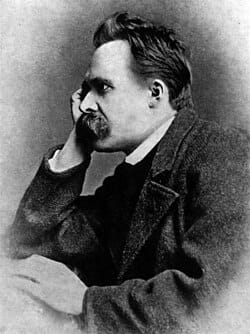
We do not just want to survive. As Nietzsche put it, we want to create, express, and push limits.
Education, Friendship, and the Human Stuff That Still Matters
Even in a post-work future, Elon thinks college has value—not for degrees, but for social calibration.
Friendship comes up too. Real friendship. The Aristotle 3 level framework kind: utility -> pleasure -> virtue. The friend who stays when things fall apart is the highest level. (How many of us have friends like that?)
Despite the cosmic scale of the conversation, Elon keeps returning to something small and human: curiosity, honesty, and building things that are useful.
I, for one, can tell you the value of the college education has eroded. Most of the knowledge that can be received from formal education can be retrieved from elsewhere, and absorbed at a much faster pace than the traditional school system can deliver. I agree in principle that the social aspect cannot be obtained through self-learning; but education reform may happen in a way to overcome this. Also, the disparity, and differences between a diploma, bachelor's degree, masters and a PhD needs to be adjusted. Perhaps an education focus episode is needed!
Final Thought: Don’t Chase Happiness
The interview ends with a deceptively simple idea. You cannot pursue happiness directly. You pursue usefulness, and happiness emerges as a side effect. Elon repeats often in this interview - he builds. He doesn't invest, or hedge or etc, he always focused on creating value and everything else is a consequence of that.
Create more value than you consume.
Build things that matter and let meaning catch up later. On this, Adam Smith was brought up on Labor Theory vs Marginal Utility. A thing is valuable because of how much work went into making it vs how badly you want that next one right now. Marshmallow test.
I closed the interview feeling oddly calm. Not optimistic. Not pessimistic. Just aware that the future is not something we are approaching slowly—it is something we are already inside. In a way, I feel lucky to be born in this era. (Side note: I found the word anachronistic very valuable in this interview). In some manner, my respect for Elon grew, as he speaks about foreign talent and the Biden administration vs whatever world politics is going on, it makes me wonder what manner of a brain this man has, on top of his current and future achievements.
My question is no longer whether things will change. It is whether we will be curious enough to understand what we are changing into.
Source | Elon Musk: A Different Conversation w/ Nikhil Kamath | Full Episode | People by WTF Ep. 16