
Honest reflections on Vinh Giang Stage Academy
Asian but a good communicator - that's Vinh. I often have the stereotype that Asians (being Chinese myself) can't speak well in the English world. I used to think good speakers were born with something the rest of us weren’t. And that you have to take on an accent. Charisma. Presence. Confidence. In other words, some people are just better at speaking or communicating than others - boy, was I wrong.
After five days of learning with Vinh Giang (and 10 hours of self-paced content), I now believe that anyone can achieve that. It takes practice and diligence. It will take time, not hours, not weeks, but months and years. And above all else, it's the framework that will help you progress forward with sureness.
What I witnessed wasn’t magic, even though Vinh started as a magician (and very successfully pivoted to become a master communicator). It was mechanics. And strangely, that made it more hopeful. Because mechanics can be trained. Confidence can be built. And voice — something we use every single day — can be sharpened like a blade.
This is not an advertisement. It is simply a reflection. You probably can't even call this a review because it really isn't. I have not been to many other courses like this to make this a fair review. I am simply grateful that Vinh and his team chose to spread this knowledge. It comes at a price to many — time, money, commitment — but so does staying unheard. What follows is the sequence in which I learned it, because that order mattered. It felt like scaffolding. Layer by layer, the structure made sense.
At the very beginning - we are presented with the Influence Square framework.
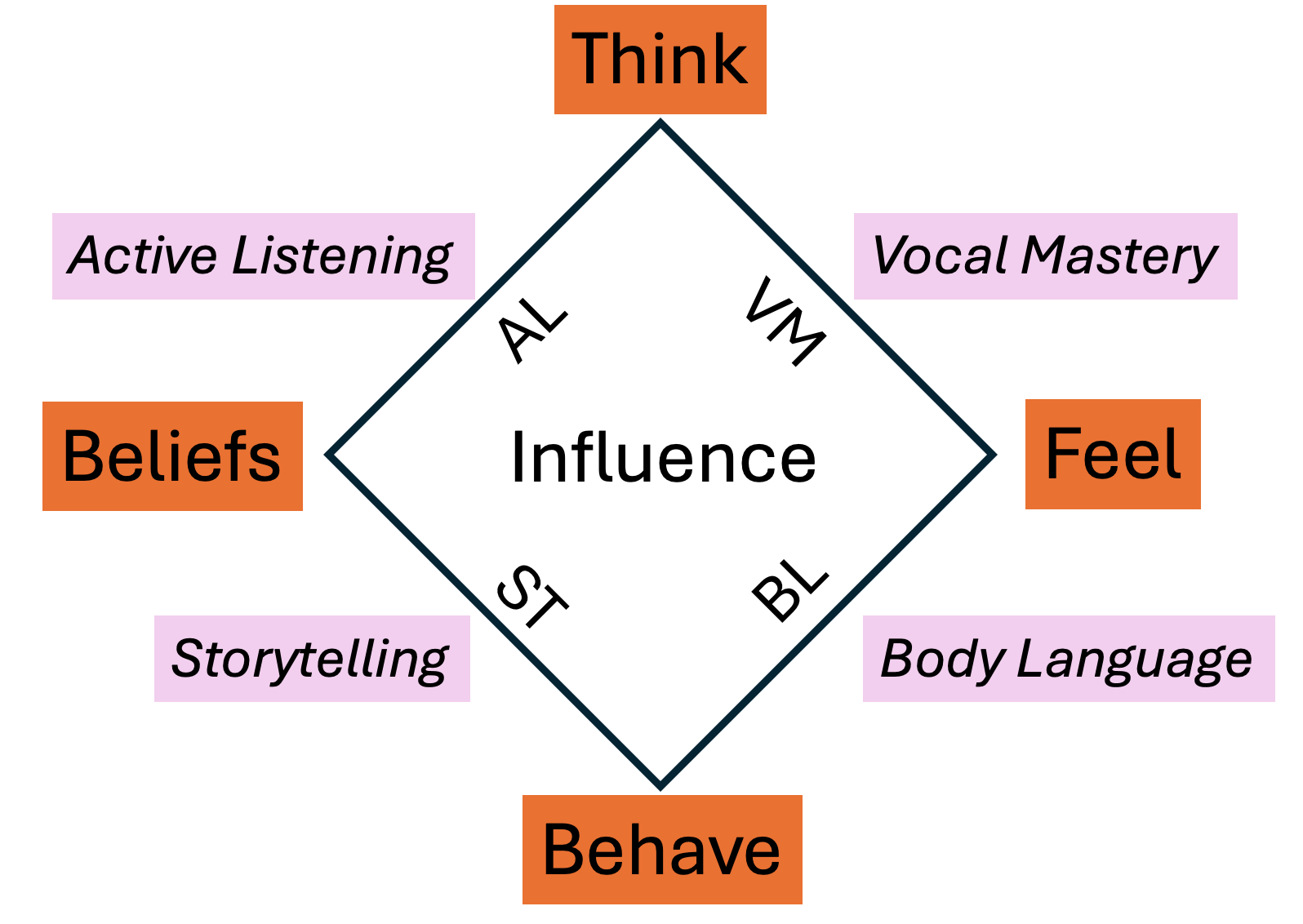
This is something to remember by because this is how the course is structured, starting from Vocal Mastery all the way to Active Listening in a clockwise manner.
Day 1 — Vocal Mastery: The Instrument I Never Learned to Play
Be so good they can’t ignore you
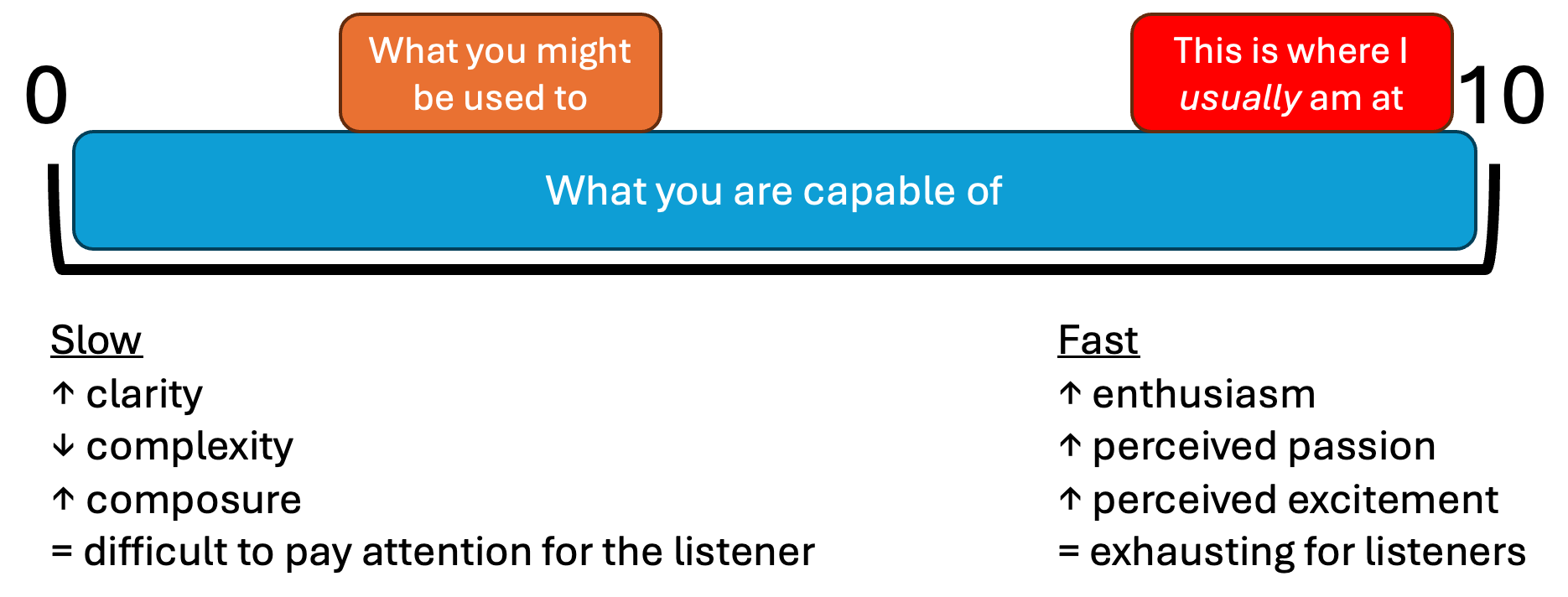
We began with something almost embarrassingly simple: rate.
Most people have far more vocal range than they use. Vinh would draw two bars — what you are capable of, and what you actually use. For most of us, the second bar is a narrow sliver. We rush when we’re nervous. We slow down when we’re unsure. But we rarely choose our speed consciously.
When you slow down, clarity increases — but listeners struggle to stay engaged if there’s no variation. When you speed up, enthusiasm and perceived passion increase — but it becomes exhausting to follow. You may also appear nervous. Neither is right or wrong. The power lies in contrast.
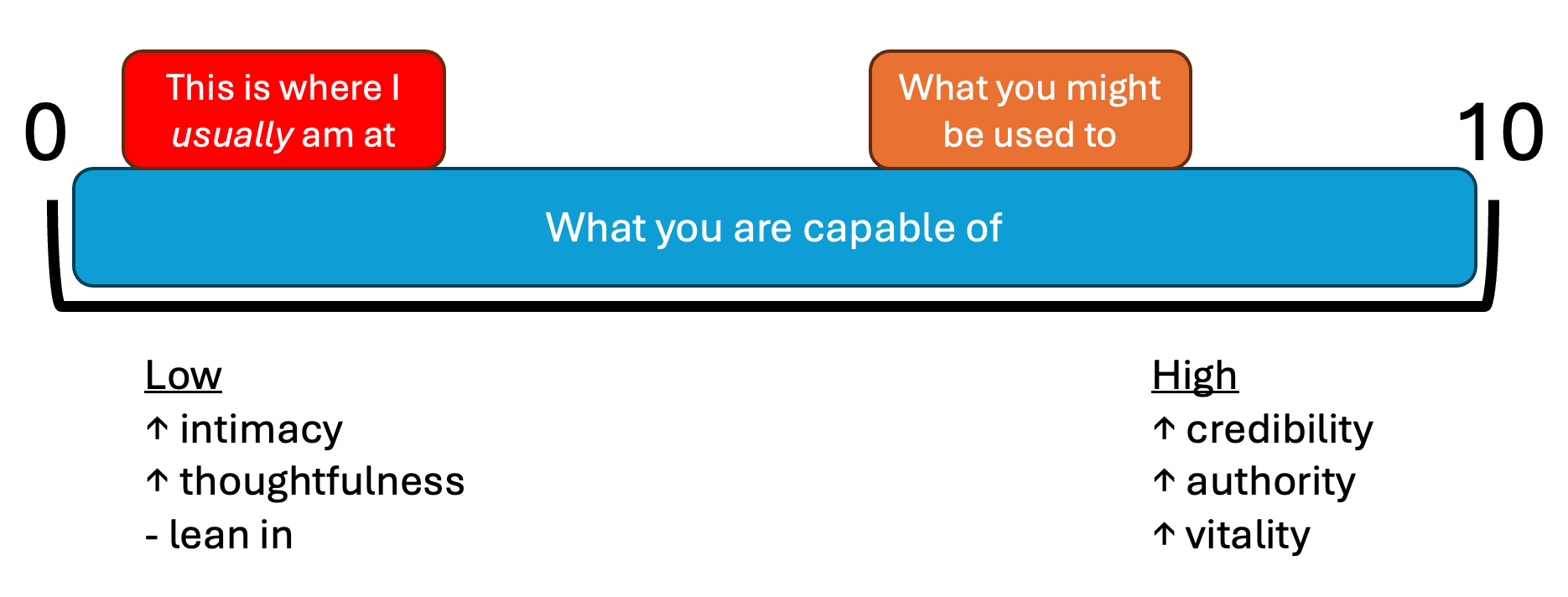
Then volume. Low volume signals intimacy and thoughtfulness; people lean forward. High volume signals authority and vitality; people sit up. But the moment anything becomes default, it becomes non-functional. If you are always loud, you are never powerful. If you are always soft, you are never intimate. The effectiveness lies in movement.
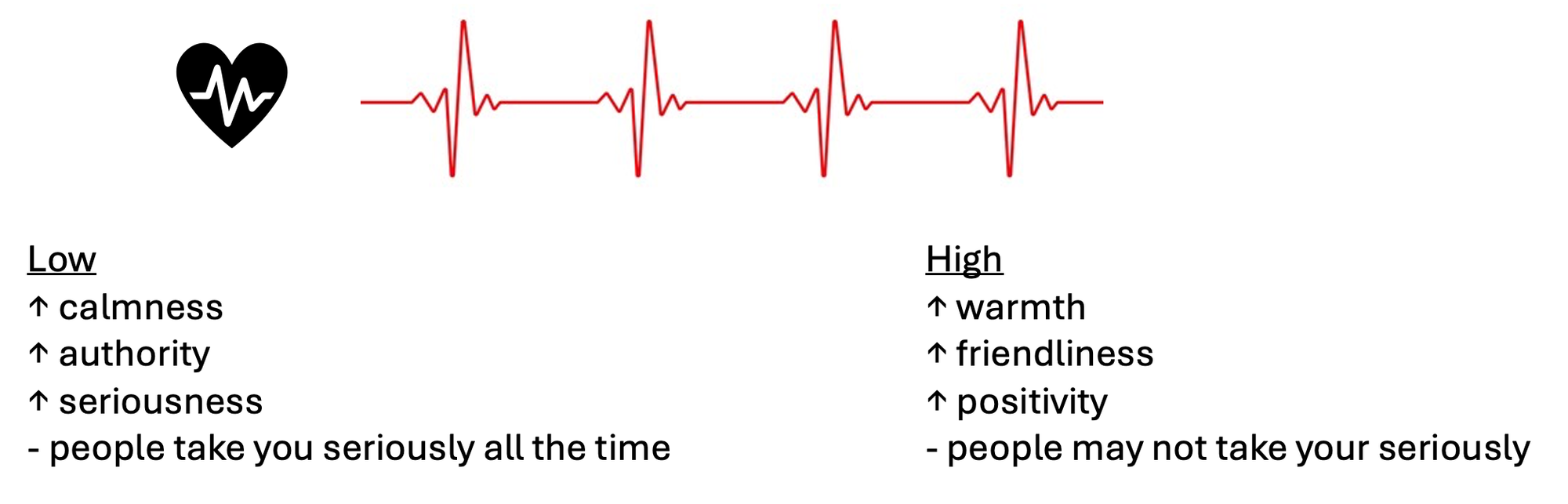
Pitch and melody came next — what Vinh calls the “sign of life.” A flat voice is biologically dull. Variation signals emotion, aliveness, intention. The “siren” technique — gliding your pitch up and down — felt ridiculous at first. But it revealed how much of my voice had been asleep.
Tonality sits underneath all of it — the emotional meaning carried beneath the words. You cannot say you’re excited with a dead face. The body betrays the voice. Bring on your facial expressions! Show everyone that you can be happy or sad. Look down on people with contempt and disgust. Run away like you are scared and fearful. Be surprised like winning the lottery. Act angry like you just lost a million dollars.

And finally, Pause.
Pause was the quiet revelation. A pause allows processing. It heightens the previous emotion. It builds curiosity. It creates tension. Silence, when deliberate, is not awkward. It is authority. It is used to highlight something.
By the end of Day 1, I realised something humbling: I had been speaking for years without ever learning how to use my own instrument.
My instrument was dull. It was soft. It was too fast. I was like a mouse that is squeaking along the corridor. Thinking back on this was informative because it reinforced what I learnt in the lessons. That our vocal instrument really requires practice. And the point is you have to use the full range of your vocal instrument. If we have been speaking in our soft, meek voice for 10, 15, 30 years, we will need months to get back the full range of our voice.
The Mastery Cycle — Knowing Is Not Doing
Vinh introduced what he calls the Mastery Cycle. Acquisition of knowledge is not application. You must try immediately. Reflect. Review. Apply again.
Most of us consume content endlessly. Books. Podcasts. Courses. We mistake absorption for growth. But without immediate execution, knowledge evaporates. To give you an extreme example, try reading a swimming book for 10,000 hours. And then see if you can swim, out in the open sea. DO NOT do that, you will probably die!
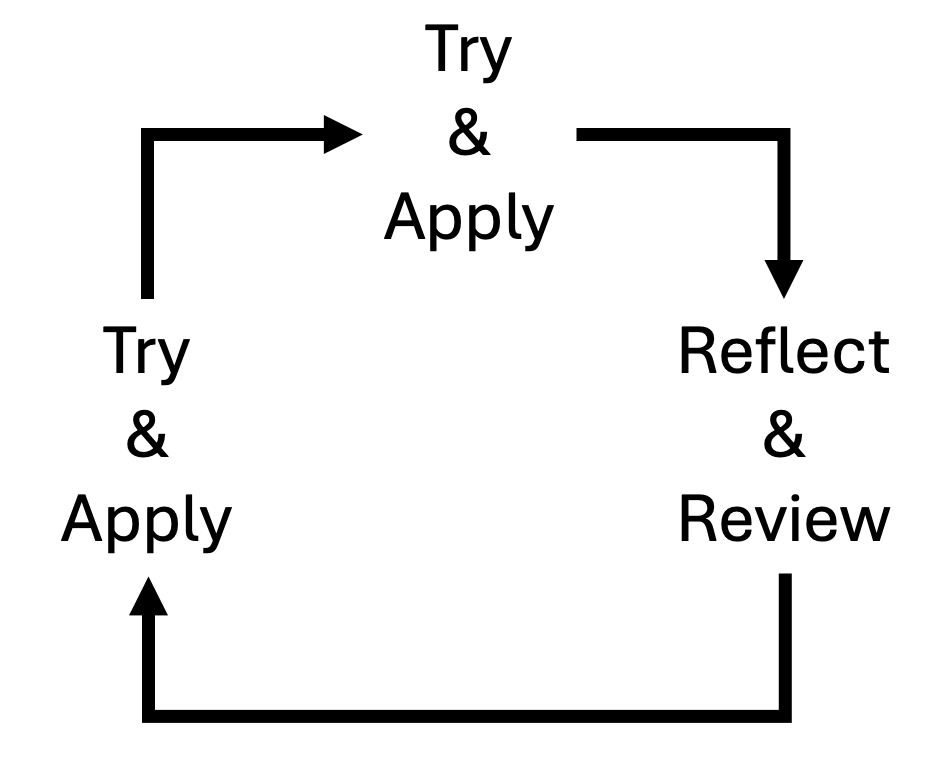
He also introduced the stages of learning: unconscious incompetence, conscious incompetence, conscious competence, unconscious competence. It is uncomfortable to realise you are bad at something you thought you were decent at. But that awareness is progress.
Don’t be a wandering generality. Be a meaningful specific.
That line landed heavily. Generalities are safe. Specifics expose you.
Fall in love with the classics.
Common Q&A at this point, especially from Asian attendees - Vinh,
Is it very fake to speak with an American (insert your choice) accent?
Vinh argues quite simply, no. He says that his beef is with articulation and pronunciation. To begin with, your natural accent is not the problem. Some languages simply do not have some letters or sounds or they are always expressed in a certain way. For example, the letter L in Chinese has a 'le' sound, and it often sounds the same as R in the chinese vocabulary.
Now if you start to find yourself speaking more American or English - the reality is you probably are not. You are simply evolving your accent so that you can pronounce and articulate the english alphabet better. And that becomes your new accent. Your family members may find you fake or off or odd - and that's okay. Let them know you are practising. Let your friends and colleagues know you are practising speaking. Before you know it, your new accent is now the new you.
And for people you have never met before - they may just find you a very good communicator indeed. But hold your horses! We are only just past Day 1.
Day 2 — Vocal Archetypes and Body Language
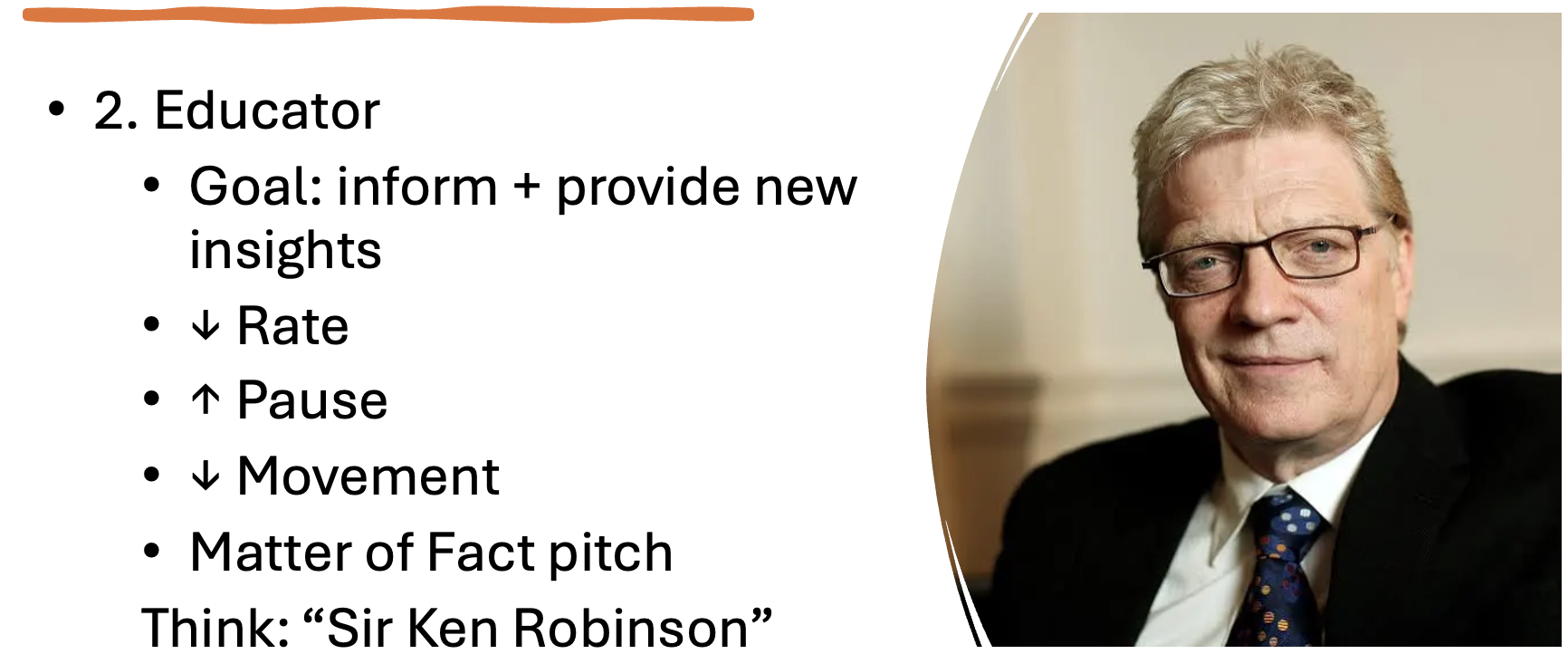
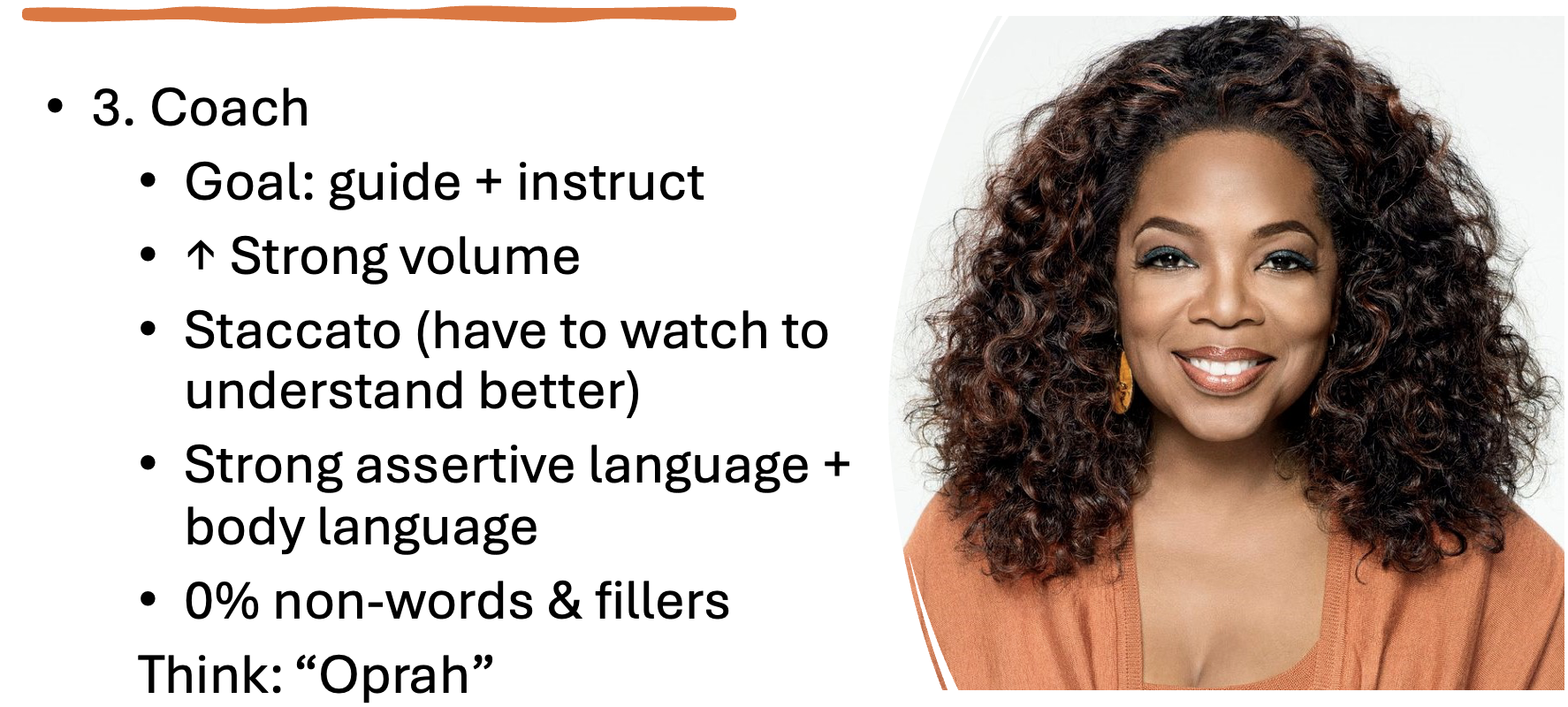
On the second day, we moved from mechanics to identity — but not in the way I expected. Vinh broke communication into four archetypes: the Motivator, the Educator, the Coach, and the Friend.
The Motivator inspires — higher volume, faster rate, expansive gestures.
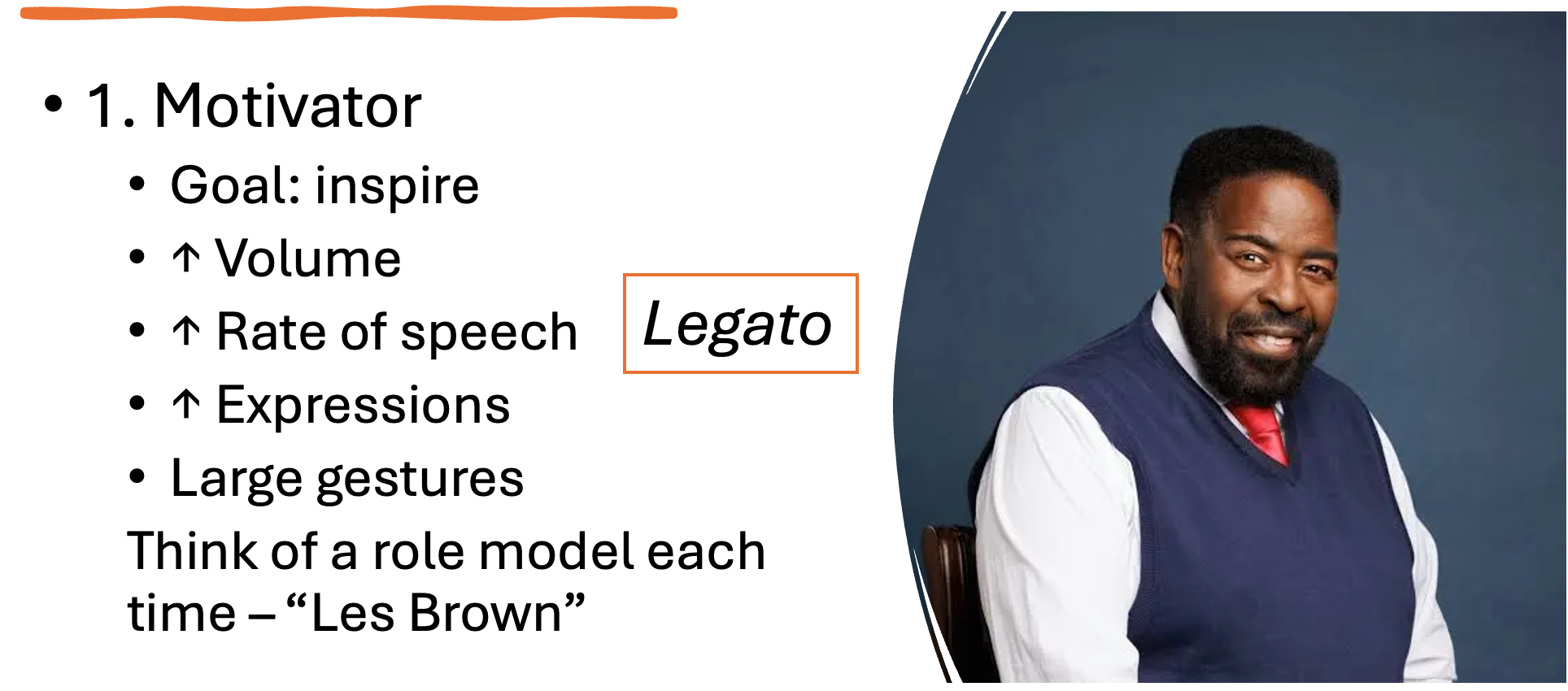
The Educator informs — slower rate, structured pauses, minimal movement.
The Coach guides — assertive, strong language, almost no filler words.
The Friend connects — melodic tone, conversational rhythm, relaxed body language.
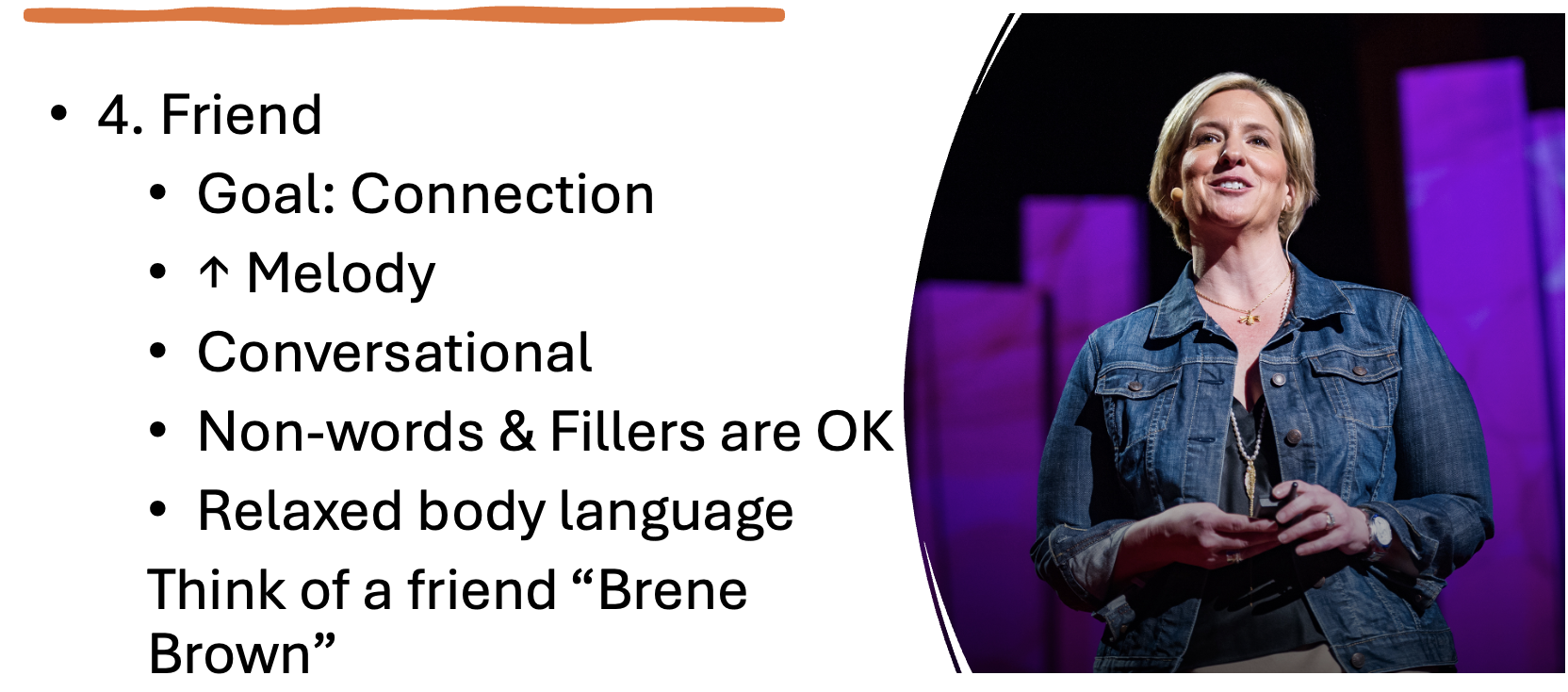
It can be difficult to understand the 4 different vocal archetypes if you are just reading this post. However, if you do intend to attend his course, or even just see his YouTube videos, it will come across to you better. I find myself defaulting to Educator all the time.
And most of us default to one. Powerful communicators move between them intentionally and there's a sequence.
Connection first (Friend). Then why (Motivator). Then what (Educator). Then how (Coach). And finally, connection again.
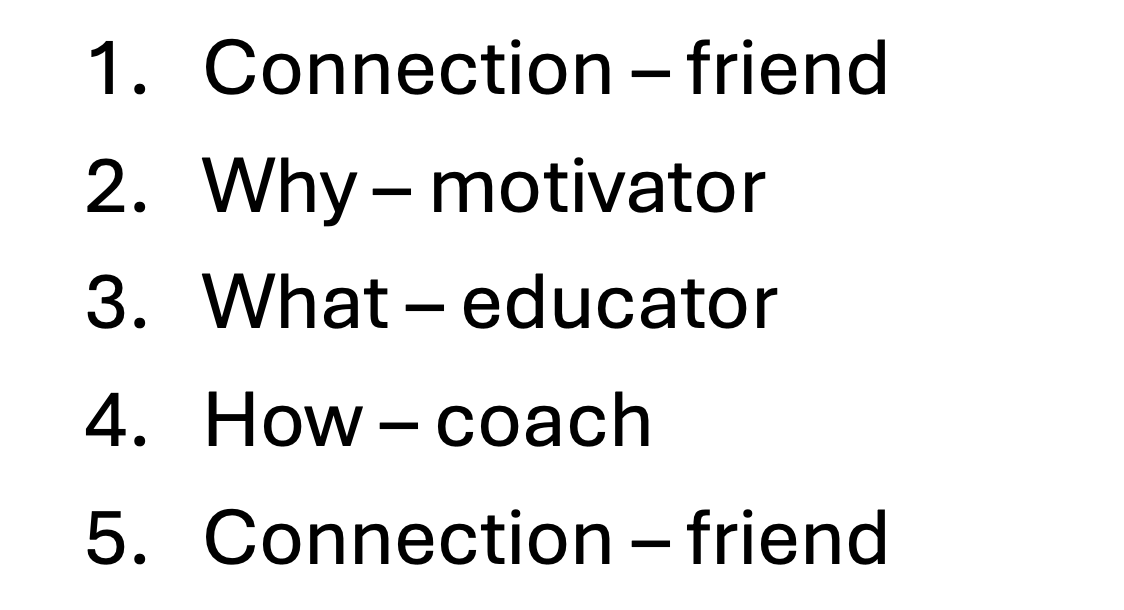
I realised I often started with information — the “what.” Data without connection is sterile. The room may understand you, but they won’t feel you. Guess what - this is a common issue with technical people like scientists or analytical people like finance. You are not alone.
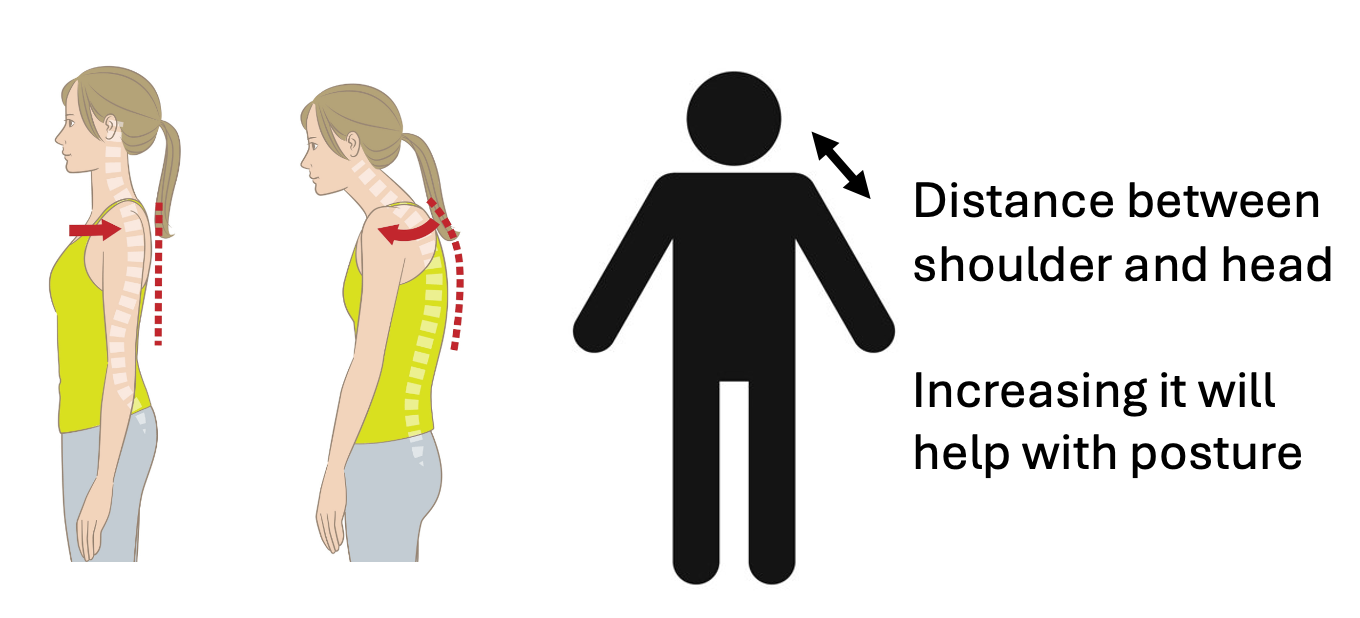
Then came body language. Posture is not cosmetic; it alters perception. Rounded shoulders shrink your presence. Standing tall, as if a string is pulling from the crown of your head, changes how you feel before it changes how you look.
Hand gestures matter too. There's a theory of gestures, also known as Satir gestures. Placater, Leveller, Blamer, and Vinh's own Computer and Distractor. Examples shown below.
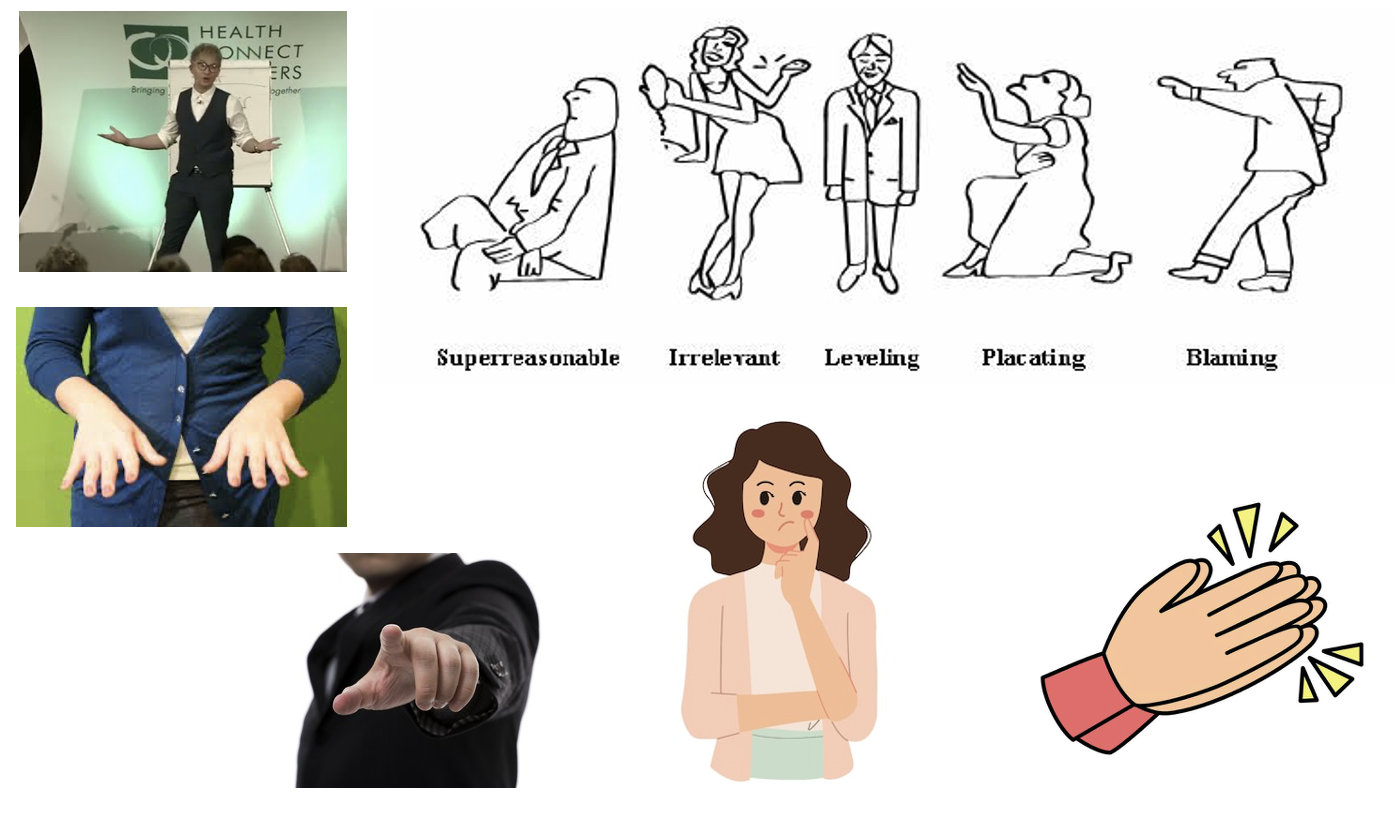
Random flailing distracts. Baton gestures — movements aligned with the rhythm of your speech — reinforce authority. Your “power sphere,” the space between your belly button and your eyes, is where influence lives. Make sure most of your movements fall within the power sphere.
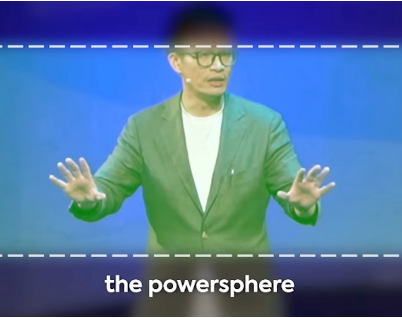
Even facial expressions require practice. Wake up the eyebrows. Exaggerate. Make the face big, then small. It felt theatrical — until I realised how emotionally muted most of us appear in daily life.
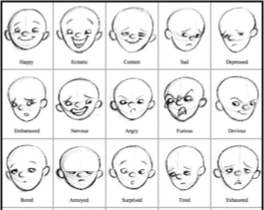
Communication is physical. That truth was undeniable.
Again, it might feel very off to your close friends and family first when you try to inject more gestures and movement into your daily communication. Warn them first so that they can be more forgiving and understanding. Before you know it, it all becomes natural.
Frameworks, Nerves, and Humour
We were introduced to conversational frameworks: PARA (Point, Action, Result, Ask), PREP (Point, Reason, Example, Point), and the 3-2-1 method. The first two are pretty self explanatory. The 3-2-1 method is basically: 3 steps, 2 types and 1 thing. For example, the 1 thing I remember about my last trip was... or the 2 types of sandwiches that I really like are...
Structure doesn’t make you robotic. It frees you from rambling.
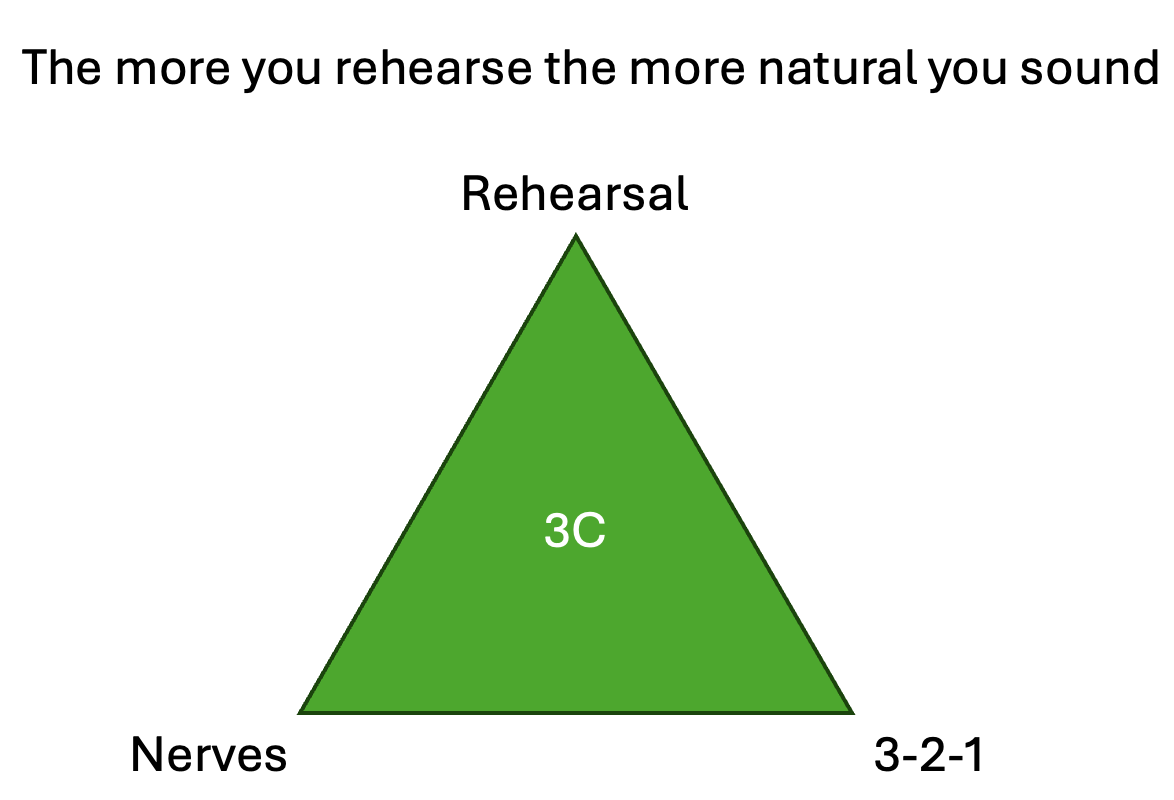
If you find that your thoughts are incoherent, or feel that you are often rambling and talking in circles, or feel that your point is not quite getting across - remind yourself to stop rambling, pause first. (Gosh, that was a long sentence!) Or give the conclusion first. Or hook first, then explain.
And if you find yourself perspiring unnecessarily a lot during a presentation, especially in public speaking situations - know that nerves were addressed head-on. Sweating is essentially adrenaline. So burn it off before stepping on stage. Jump. Move. Get your heart rate up intentionally so your body doesn’t hijack you while you are presenting.
Moving on to humour. Humour, as we learned, is an extremely important tool to build trust between you and your audience. It is a spectrum between benign and violation. You test gently. Listen. Adjust. Trust builds slowly.
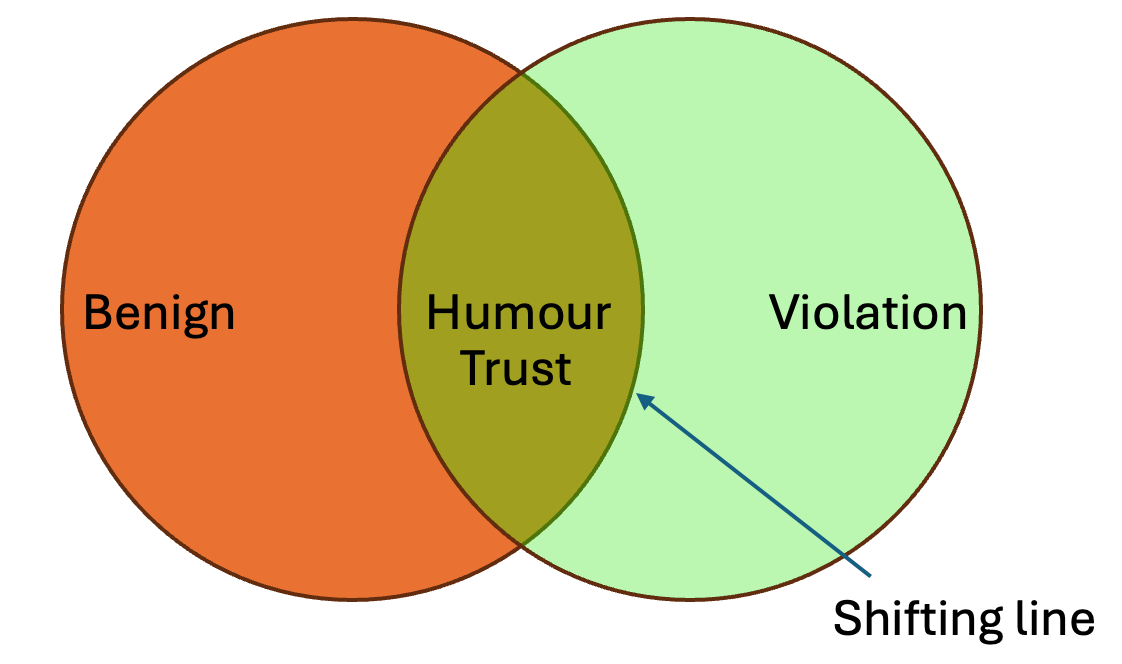
I appreciated that humour wasn’t taught as a gimmick, but as a social calibration tool. How do you know that your level of humour is correct? Always listen first. Listen for 5 minutes, then test a benign joke. Watch the audience's response. Then repeat towards the right till you get the right amount of humour.
Day 3 — Storytelling and the Chemistry of Connection
This was the day everything clicked.
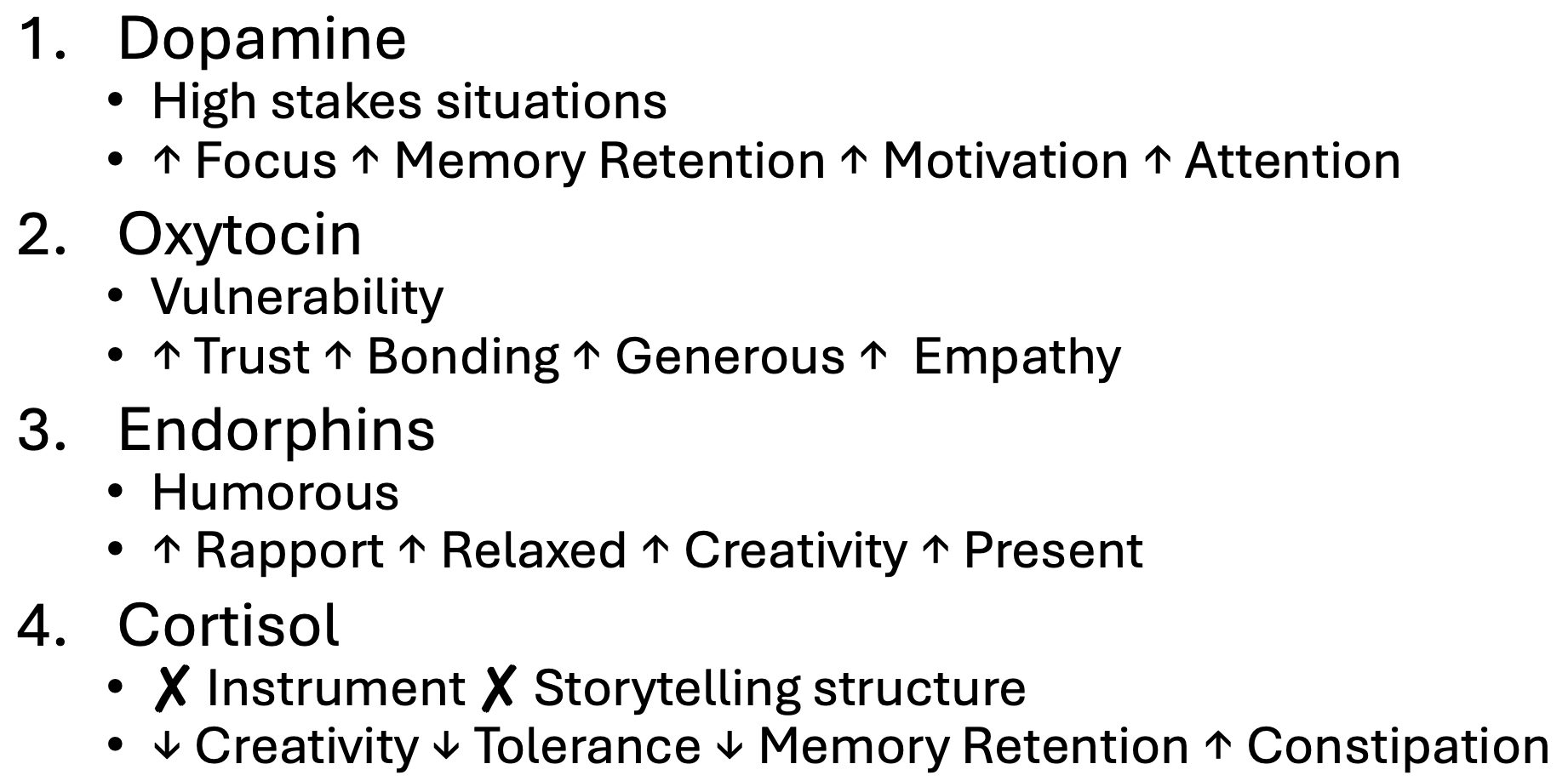
Storytelling isn’t decoration. It is biochemistry.
High-stakes stories increase dopamine — sharpening focus and memory retention. Vulnerability releases oxytocin — deepening trust and empathy. Humour releases endorphins — relaxing the room and increasing creativity.
Cortisol, however, destroys it all. Stress reduces tolerance, creativity, and memory retention. When we panic, we become biologically worse storytellers.
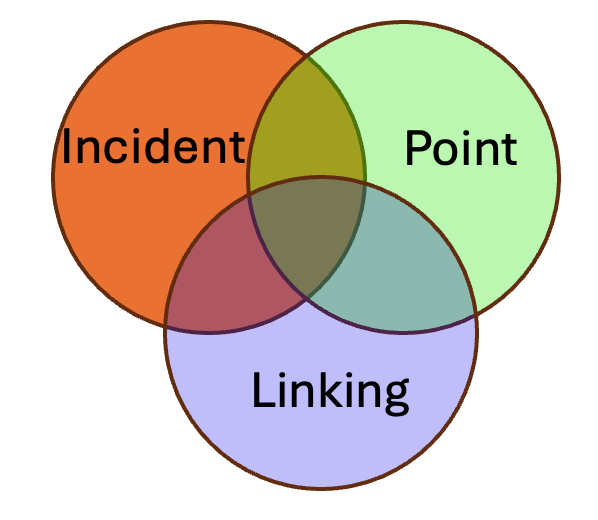
The storytelling formula was clear: Incident. Who. What. Where. When. Then the point — “The reason I’m telling you this is…” Then link insight to information.
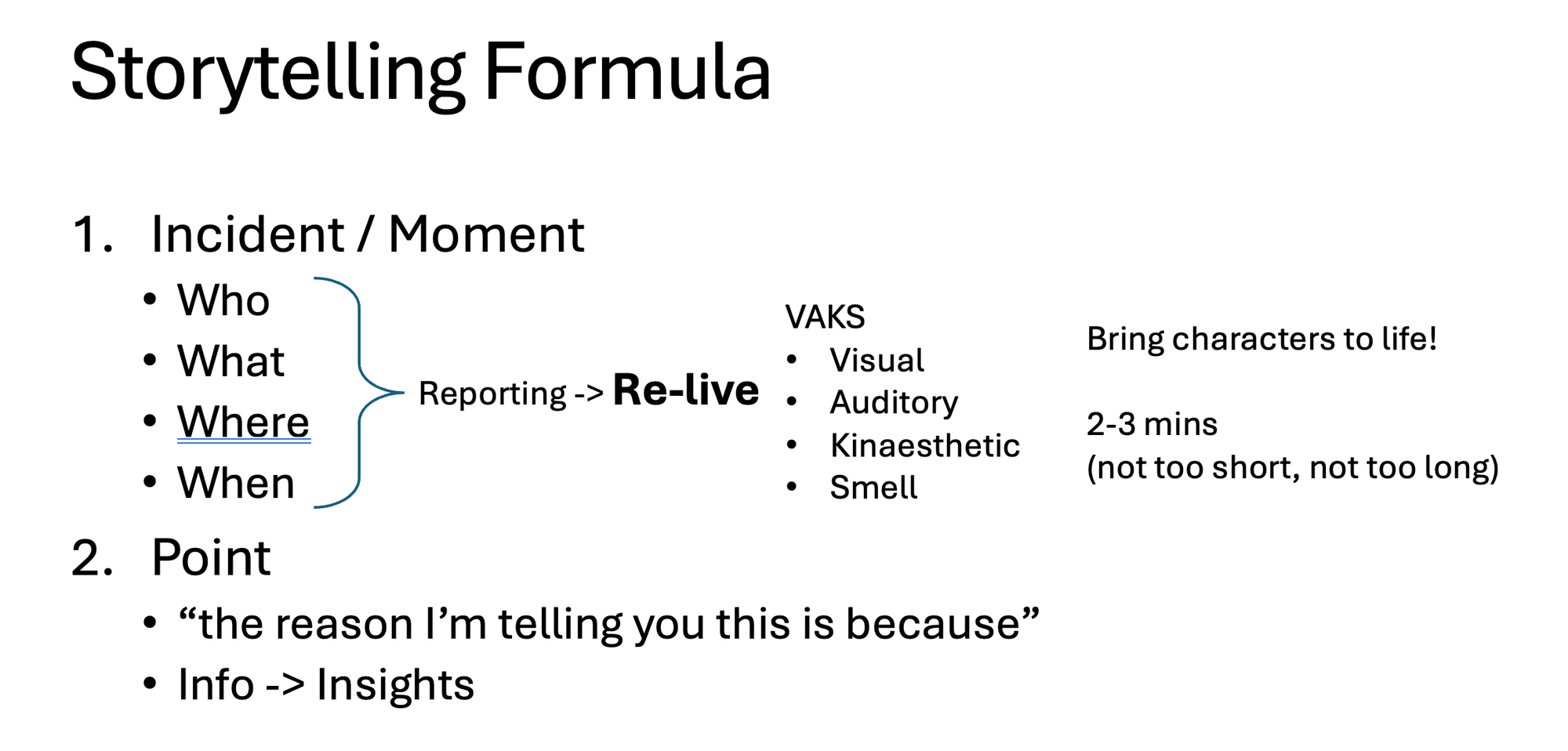
Reporting is dull. Reliving is magnetic. Turn your reporting to drama.
Engage VAKS — visual, auditory, kinesthetics, smell. Bring the audience into the room with you. But keep it tight. Two to three minutes per story. No indulgence. During the breakout sessions, we were impromptu asked to do a story (#nonails). You will be surprised by how fast 2-3 minutes seem like, and just felt about fine.
Storytelling, I realised, is generosity. You’re giving someone an emotional experience — not just facts. There's always a saying that the best gift you can give someone is your attention. Storytelling, is very much the same thing.
Day 4 — Analogies, Metaphors, and Similes
If storytelling builds emotion, analogies build clarity. Day 4 builds on Day 3. Maybe it's just filler content. (This is a joke, if you didn't catch it).
An analogy connects the unknown to the known. It simplifies the complex and “tickles the brain.” That small internal “Oh…” is clarity forming.
A ship in a harbour is safe but that’s not what it is built for
Analogy: A is to B as C is to D.
- Reading is to the mind as exercise is to the body. (A)
Metaphor: A is B.
- Reading is exercise for the mind. (M)
Simile: A is like B.
- Reading is like exercise for the mind. (S)
Together, they form AMS.
Well - if it was difficult for you to understand the nuance, know that it was the same for me too. By practising, we can do perfect AMS. We were taught to list favourite objects, describe them vividly, then connect those descriptions to abstract ideas. It’s a deliberate creativity process.
Three structures. Same idea. Different weight.
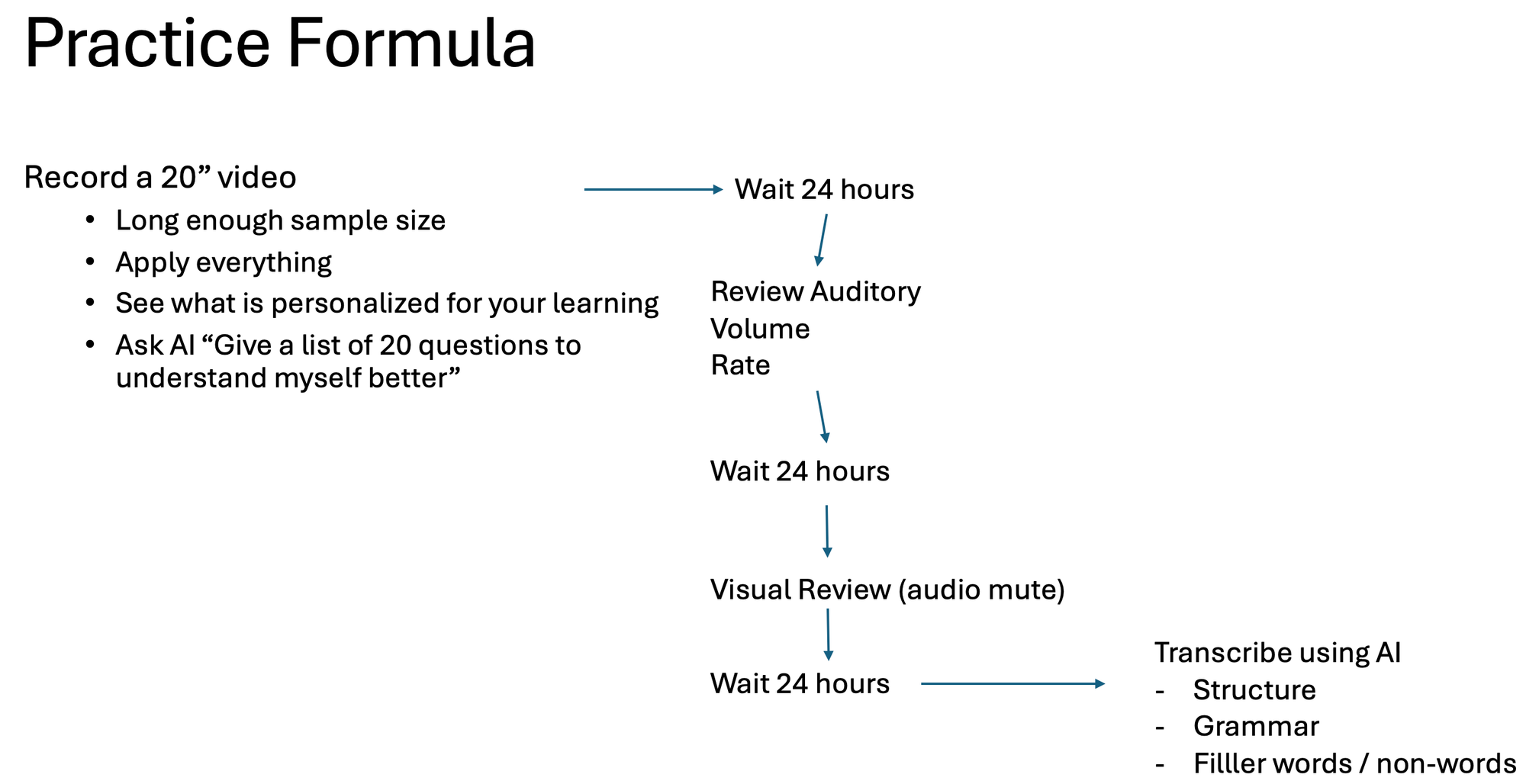
Is practising a waste of time? Frankly, no.
Give the future you a chance
It reminded me that clarity is kindness.
Keep practising. #dontbethepdf - the size of a $1 and a $100 bill is the same. But the value they contain is so much different. Use your instrument and be strong. Practise using AMS in your daily conversations.
Day 5 — Active Listening and Confidence
The final day felt less like speaking and more like maturity.
Passive listening looks like a) judging, b) giving advice too quickly, c) 1-upping, d) mindreading, or e) daydreaming. Active listening distributes attention across four areas equally: words, mood, vocal shifts, and body language.
- “What I’m hearing is…” –> Understood
- “It sounds like…” –> Connected
- “It looks like…” –> Seen
- “What I’m sensing is…” –> Heard
Who would not want to be feel understood, connected, seen and heard during a conversation? When someone feels heard, they feel seen. When they feel seen, they feel connected. That is why active listening is so important. It connects you to your audience.
Moving to Confidence - as we learned, is not a feeling you wait for. It’s a byproduct of mastery. The Shu–Ha–Ri model — obey, bend, break — reinforces that creativity and fluency are earned.
Do not let what you cannot do interfere with what you can do.
That principle from the coach, John Wooden, struck me. Focus on what you can control today. Not yesterday. Not the outcome. Just the present effort.
- The Core Principle: "Do not let what you cannot do interfere with what you can do".
- The Consequence: "The more concerned we become over the things we can't control, the less we will do with the things we can control".
- Focus on the Present: He taught that you cannot change yesterday or fully determine tomorrow, so you must focus on making today your "masterpiece".
- Actionable Advice: Instead of worrying about results, focus on maximum effort in the present, which actually increases the likelihood of a positive outcome.
And to round it up is my favourite topic: Executive Presence - because I am often told that I do not have executive presence by my bosses or even HR, but they could never tell me what is executive presence. And so we finally have the answer.
Executive presence isn’t dominance. It’s a combination of vocal presence and physical presence. Speak loudly, speak with volume, speak with pauses. Stand straight, big gestures, give strong eye contact. This leads to confidence, and that feeling, will have a feedback look to create that executive presence.
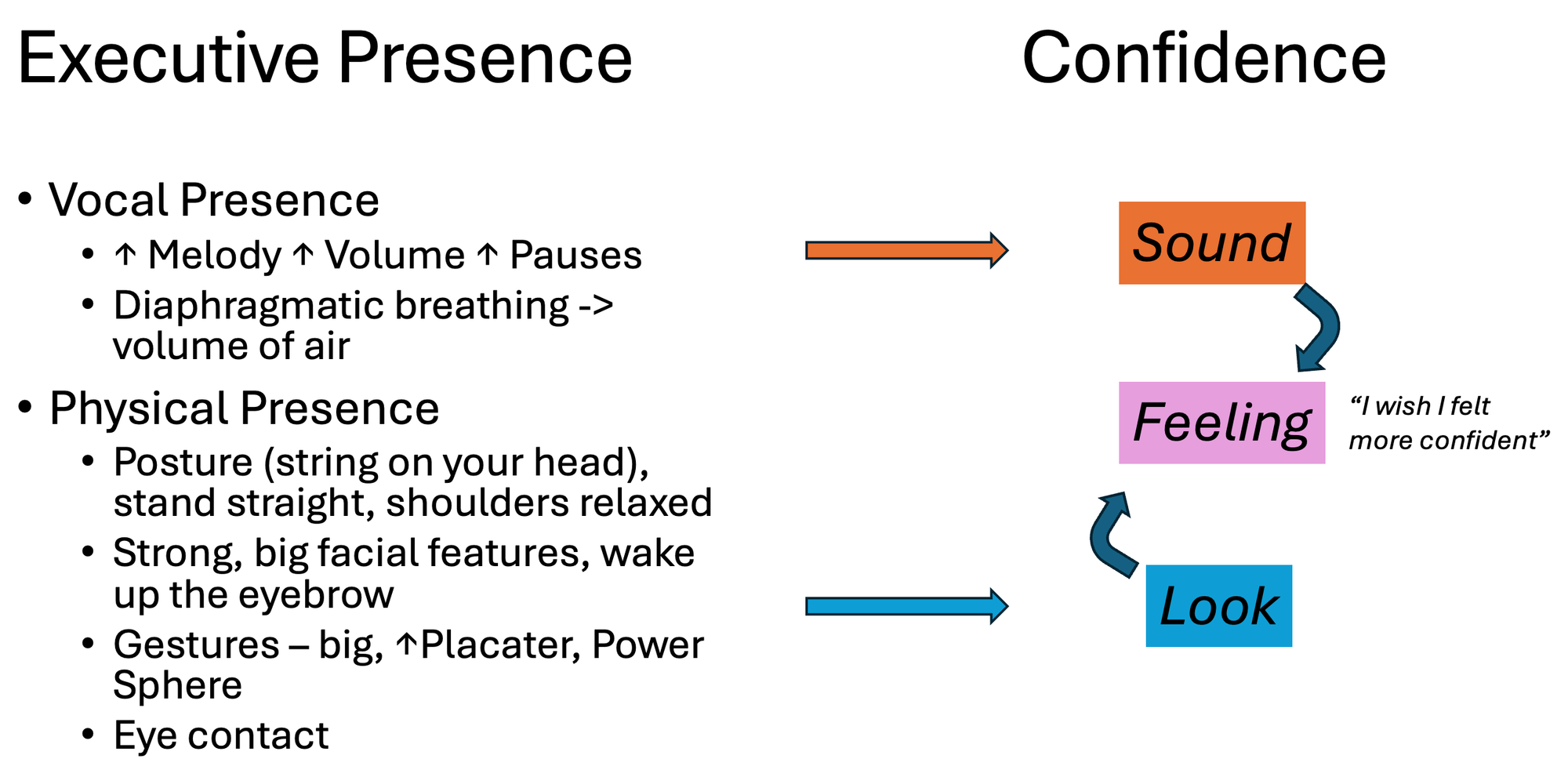
Armed with this new knowledge, why don't you try practising having executive presence, like I do now? 😃
What Stayed With Me
I attended the full online, self-paced content. I also participated in the 5 x 2.5 hour mastery course. What's left now is the in-person course, which is few scattered across the world in a single calendar year.
Yet just the former two courses were enough in my opinion. Because what stuck with me is really the need to practise. The self-paced course is very sufficient if you have the discipline to practise and be good. And if you need the early push, the 5 x 2.5 hour course will help you realise some early wins, thus giving you more confidence that with practice comes perfection.
I leave you with Vinh's favourite quote:
“Reality is negotiable."
Speaking exposes you. Listening deeply exposes you. Showing up intentionally exposes you. But the alternative is worse — drifting through conversations as a wandering generality.
I left those five days with more than techniques. I left with a deeper respect for communication as a craft. It is not about being louder. It is not about dominating a room. It is about moving between connection and clarity with intention. Try saying "yes, and..." instead of "yes, but...". When you reframe the unknown, from scary to exciting and fun, you will find the world a lot better.

I even learnt tools such as the Emotional Breath from Michael Bungay Stanier:
- What’s on your mind?
- What else? Tell me more…
- What do you think is the real problem?
- How can I help?
- What did you find most useful?
These five questions will help you take a breath during a conversation. It will help you be a better listener. And the person you are speaking to will also feel more connected.
If you read this far down, I am thankful.
Take rest now, pause, and practise.
Source | Vinh Giang Stage Academy