Andrew Huberman's Protocols
In this podcast, we see Prof Andrew Huberman's Protocols condensed into a 2 hr 15 min episode. Andrew is currently a neuroscientist and tenured professor at Stanford.
First, let's establish that Andrew has faced much criticism. Basically for sometimes overstating the power of supplements. "My life has changed so much, for what I can only describe as miracles". Having said that... I think much of what he has to say still can be quite relevant.
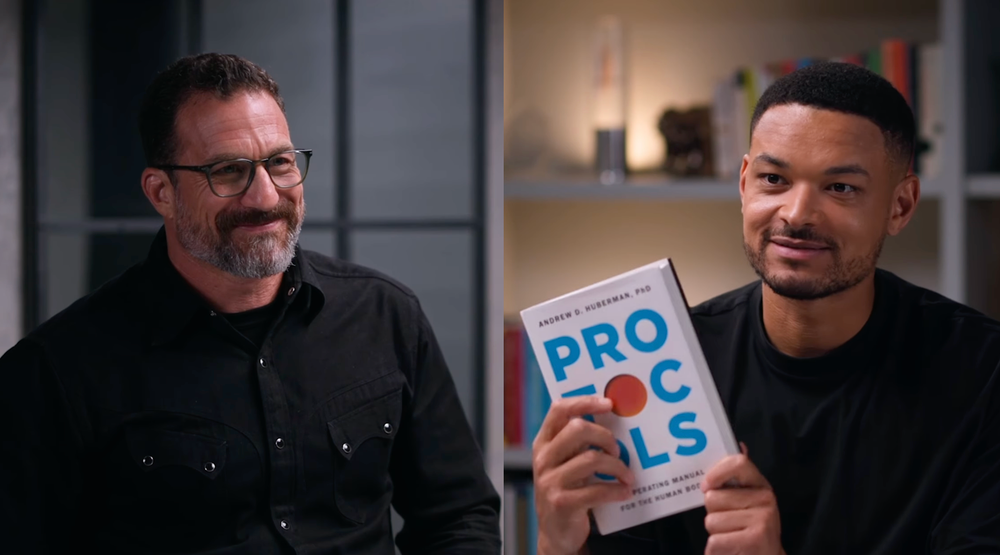
The book, Protocols, aim to surmise his learnings over many years. Supposedly fact checked and evidence based. I have yet to read it, but I have ordered it so let's see how it is when it does arrive.
Steven Barlett says there are roughly 50 protocols in the book. 10 of them are covered in this episode. Mental health, physical health, and 'performance'.
Top 10 things you can do everything, which I nicely stole from the top youtube comment (thank you @aleembasraa). This is basically the TLDR.
- Early Morning Sunlight: View natural sunlight within 30–60 minutes of waking to optimize cortisol, energy, and hormones.
- Immediate Morning Hydration: Drink 16–32 oz (500 ml to 1 litre) of water upon waking to replace fluids and awaken brain circuitry.
- Resistance Training: Perform 45-minute weightlifting sessions close to failure to build strength, metabolism, and bone density.
- Fast-Acting Stress Mitigation: Use the physiological sigh (double inhale, long exhale) to instantly lower heart rate and stress.
- Post-Meal Movement & Red Light: Walk outside after meals to leverage long-wavelength light, boost mitochondria, and blunt glucose spikes.
- Deliberate Cold Exposure: Take brief cold showers or ice baths to trigger long-lasting dopamine, focus, and mental resilience.
- Daily Effortful Work: Engage in friction-heavy tasks to stimulate the anterior midcingulate cortex and build willpower.
- Evening Light Restriction: Avoid bright LED lights and screens after 6:00 PM to protect sleep and melatonin levels.
- Glymphatic Sleep Clearance: Prioritize optimal sleep environments and side-sleeping to flush metabolic waste out of the brain.
- Non-Sleep Deep Rest (NSDR): Practice NSDR or lateral eye movements to rapidly calm the nervous system and recover lost sleep.
Now if you want to, we can read on. Let's dive just a little into each point and ask 'why'..
1&2 - Early Morning Sunlight and Hydration
You need natural sunlight or 10K lux artificial light (assuming no access to sunlight). Viewing sunlight, especially low angle sunlight in the morning, very good for stimulating melanopsin ganglion receptors, telling your body the day is waking.
Activates the HPA (hypothalamus, pituitary, axis). Triggers your adrenals to release additional cortisol.
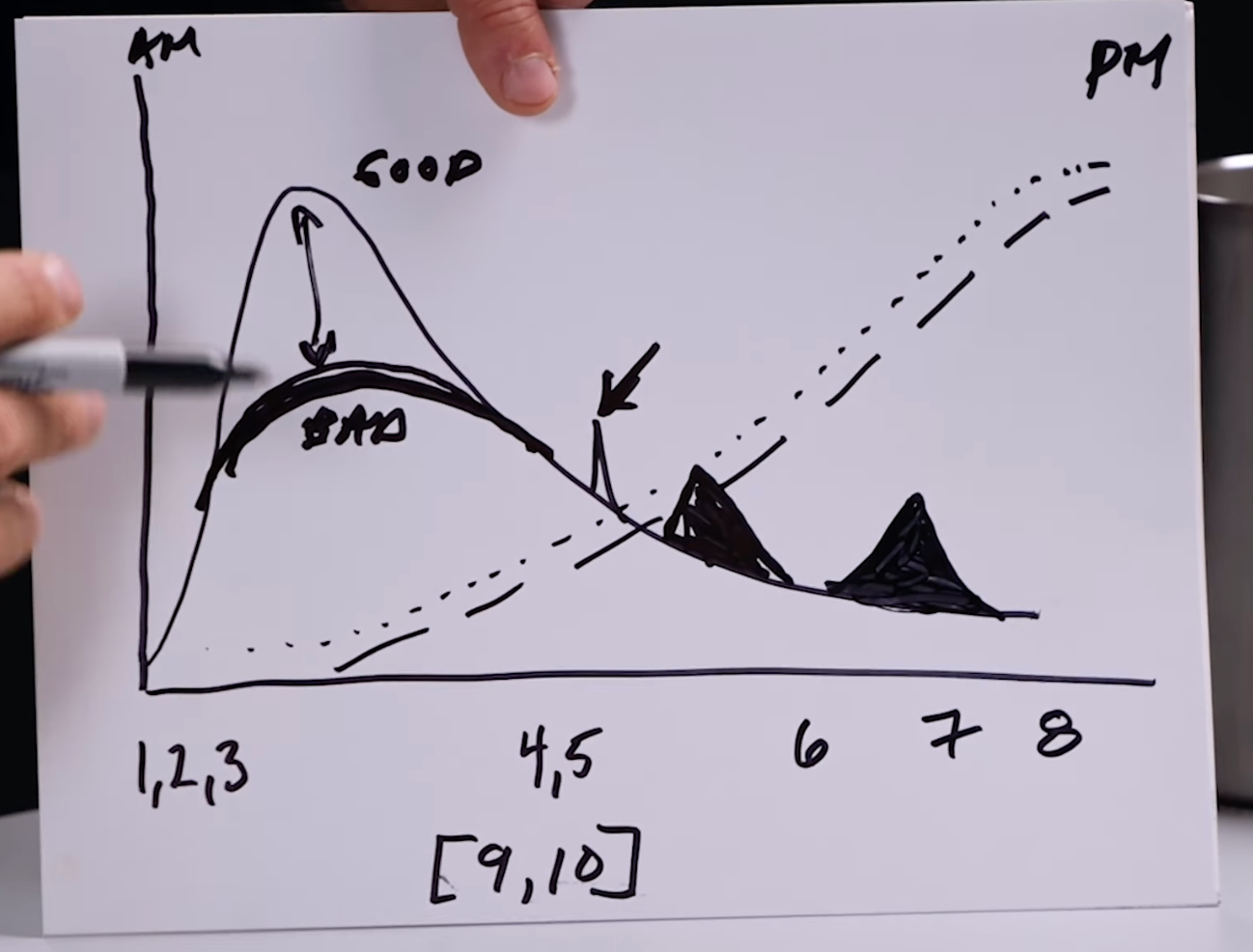
Increase in cortisol is driven by sunlight in the morning. Then at night, your sleepiness hormones (e.g. melatonin) will peak accordingly. Side note, cortisol is not always bad. It's a required hormone to regulate your body. Pretty much all hormones are the same. Too much or too little of anything is generally a bad thing.
Cortisol - is it a stress hormone? No. It's a hormone that's released during stress. Cortisol mobilises energy in the body. Cortisol comes down at night because you dont need to mobilise energy during sleep.
Suppose you miss a day of sunlight, it seems that it's an additive process. So it means you can then do double the dose the next day. Again, Andrew stresses that you don't need to see mid-day sun, just the morning, low angle sun, is best since it has less UV as well.
Infrared or far red wavelength does conformational changes to your mitochondria. Looking at artificial red light through your eyes directly for 2-3 minutes daily, in first 3 hours of the day, reported only in people over 40, experience improvements in visual acuity.
Don't like direct sunlight? Get out into greenery. Green reflects light all over, the light will then get into your body. 29,518 women over 20 years, self-reported with more sun exposure, tend to live longer. Non-smokers that avoided the sun, had similar life expectancy to smokers that has the highest sun exposure. Take that!
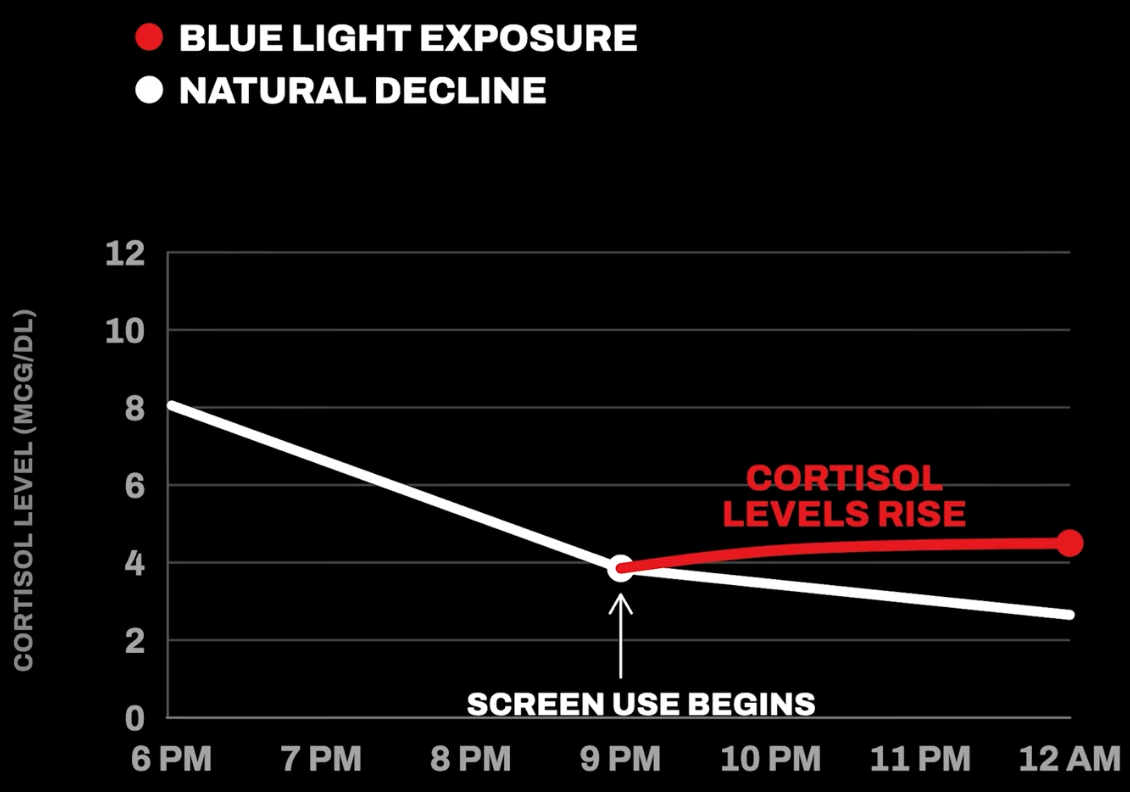
Night shift workers suffer the most. The International Agency for Research on Cancer (IARC) classifies night shift as Group 2A, e.g. 'probably carcinogenic'. Here's the funny and scary thing: all of us probably qualify as night shift workers. Most studies simply define night shift as after 6pm, still on artificial LED exposure or doing activities besides eating and socialising with family. Working at night, at home, is still a night shift worker.
3 - Resistance Training and Cardio
Exercise, which we have covered many times in my website, remains a critical foundation. Andrew posits intervals of cardio and resistance training.
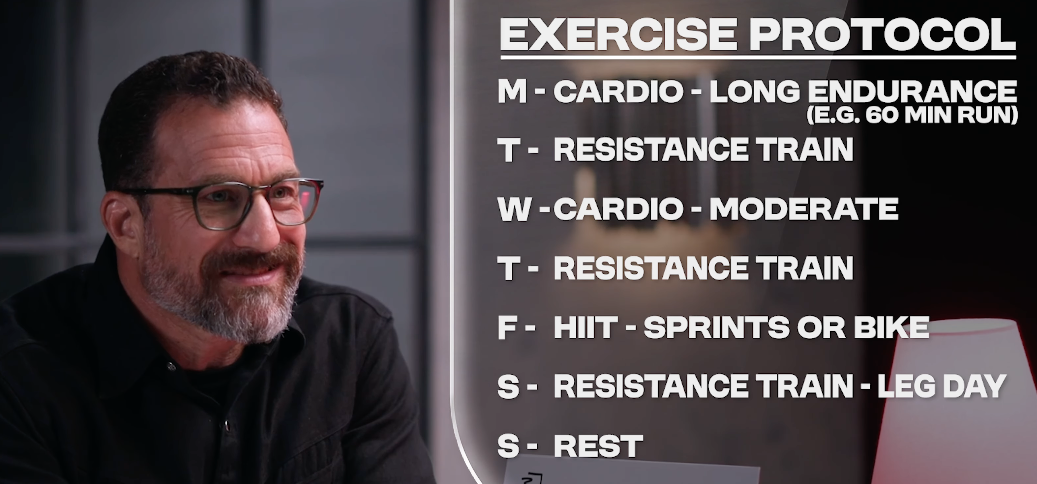
For one, I have incorporated resistance training into my regime. It has a huge impact for those of you that are purely on cardio or have just one session of resistance training a month (or 2 weeks). Having regular resistance training, such as the use of a kettlebell, is going to immensely help you attain a flatter tummy and overall shape and tone up.
Additional effect: Exercise makes you more alert through cortisol and adrenaline, so you learn things better and faster. And the effect lasts for 4 hours after a resistance or HIIT exercise.
4 - Fast-Acting Stress Mitigation: Use the physiological sigh (double inhale, long exhale) to instantly lower heart rate and stress.
The ability to manage stress is surmised as your ability to turn the knob in the picture depicted below. In the first 20-30 seconds of an acute stressful situation, understand that your prefrontal cortex is effectively shut down. You are brain damaged.
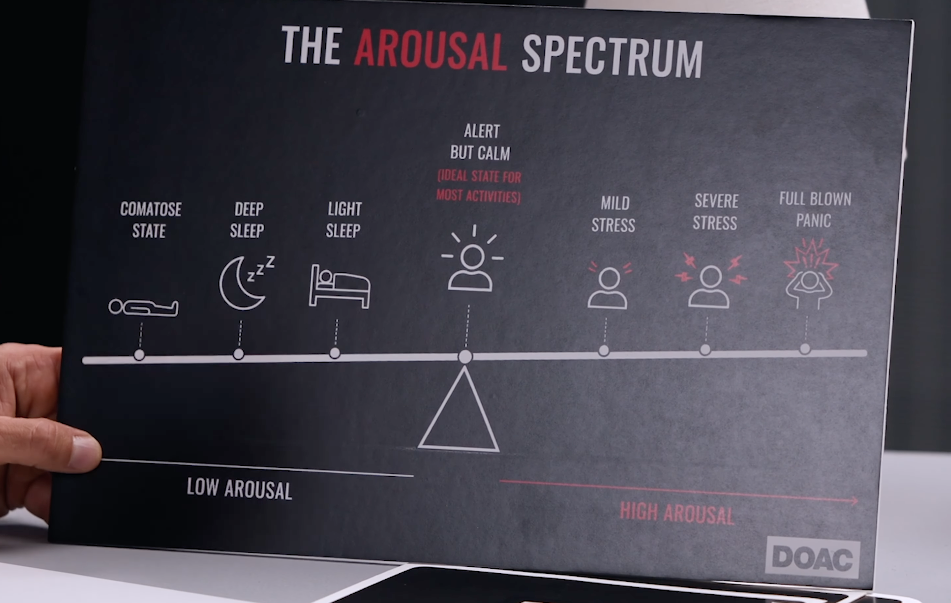
It is kind of the same advice for relationships. It is the same for seeing a FOMO instagram post. Or a twitter post that is saying something bad about you or your loved ones. Take the first 20-30 seconds and do not do a darn thing! Andrew shared his experience over seeing something he does not like about in the night, and woke up the next morning finding out it was a complete misunderstanding and everything was reversed. He wanted to send a text last night, but remembers that the prefrontal cortex ability is already diminished at night, plus the acute stress, hence it's a really bad idea to make decisions at night.
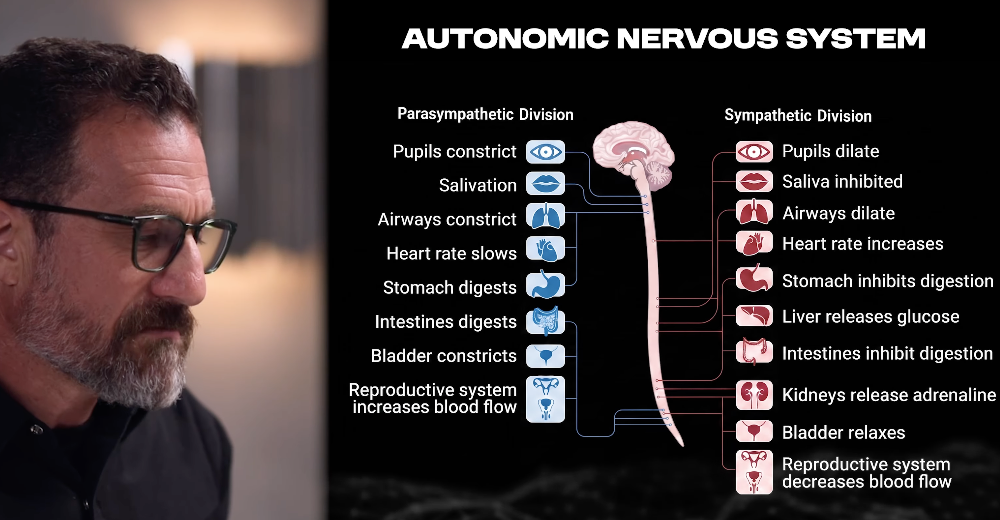
Cyclic hyperventilation. Some call it Wim Hof breathing, Tummo breathing, pranayama breathing, all really the same thing. Big inhale, passive exhales. Repeat for 5 minutes.
Double inhale, one long passive exhale.
It was a discovery at UCLA (guy called Jack), an observation that when animals are very relaxed they do this double inhale thing.
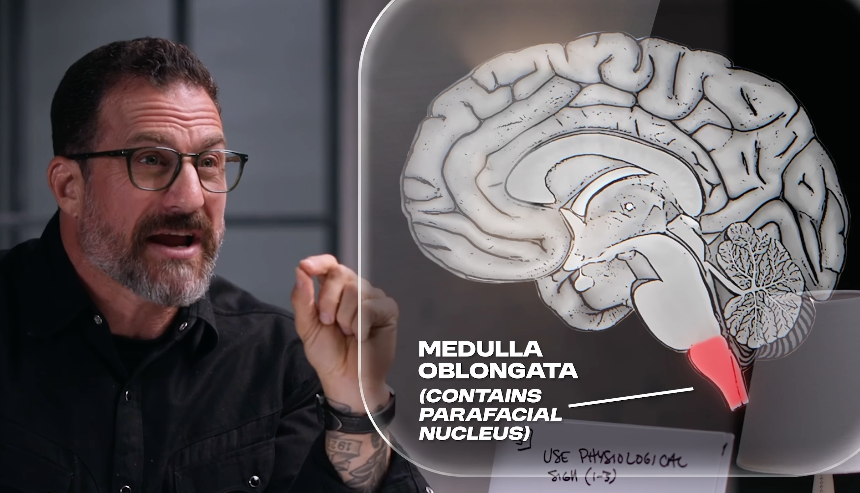
Cool huh? The idea that nature makes a brain part for that purpose. It's triggered during high acute stress, claustrophobic environments, low oxygen situations.
And the long exhale is critical. Slows your heart rate down through respiratory sinus arrhythmia through the vagus nerve.
And the really cool thing is you just need to do it once before you go up on stage. It has an immediate effect.
Side note you can also do EFT (Emotional Freedom Technique), where self-tapping on various acupressure points can help to lower stress and anxiety.
5 - Post-Meal Movement & Red Light: Walk outside after meals to leverage long-wavelength light, boost mitochondria, and blunt glucose spikes.
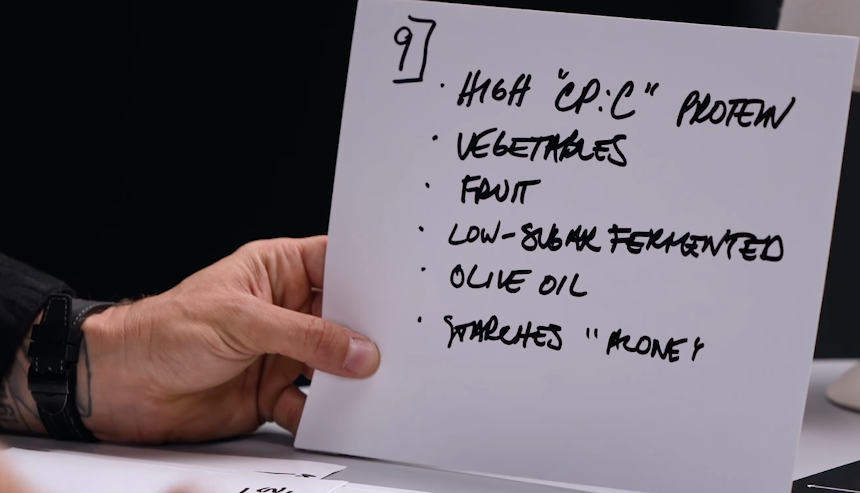
Diet is supposed to be 9th on the list (but again I took a easy way route and copied pasted another person's summary, trade-off).
High CP:C = high complete protein to calorie ratio diet. Eggs, lean meat, fish, vegs, fruits. There was a funny comment here which I don't quite agree... some people who eliminated starches or vegetables from their diet had their autoimmune issues resolved. This is based on a 2021 Stanford trial - it is more towards too much fibre, the trial itself did not say that fibre was the cause of increased inflammation.
Fermented food on the other hand (covered also in another episode), has been shown to decrease inflammation.
Walk after your meal, 30-60 minutes a day. When you walk outside, you get the sunlight as well, that has an effect on the mitochondria as we have covered already. Or do 10 air squats (separately covered as well) every hour of sedentary have similar effect. Non exercise activity thermogenesis (NEAT), which we have also covered in a different episode, burns a lot of calories, up to 1,800 calories a day. Aging = muscle mass loss = reduction in metabolism is not true. People are moving less when they get older.
6 - Deliberate Cold Exposure: Take brief cold showers or ice baths to trigger long-lasting dopamine, focus, and mental resilience.
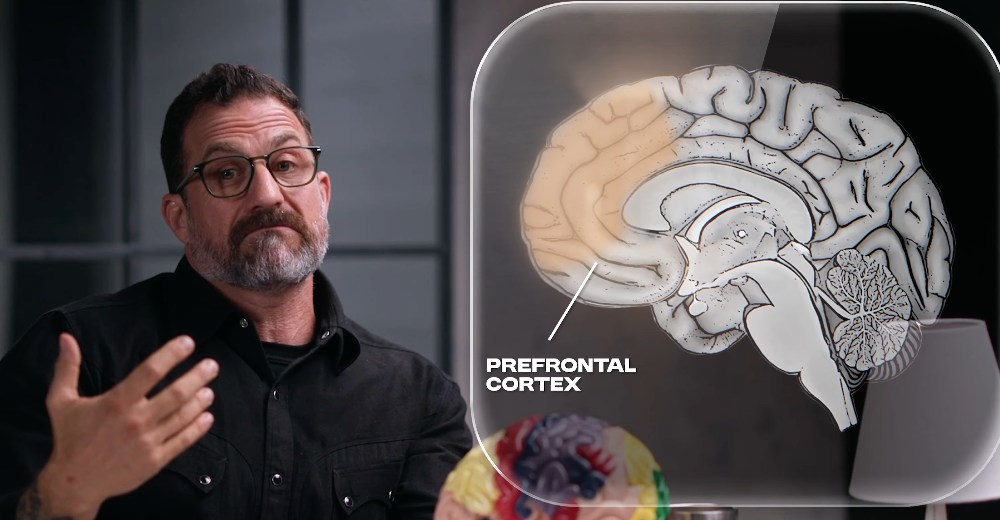
Doing a deliberate cold plunge, has the same effect of acute stress to your prefrontal cortex. It trains your ability to take stress.
It trains your ability to do a top-down inhibition. You feel an impulse, you resist the impulse. It is a really important skill to build. People with PFC damage, can be violet and do inappropriate things.
Combined with the AMCC below, together they build willpower. It is a neurological investment into your future.
7 - Daily Effortful Work
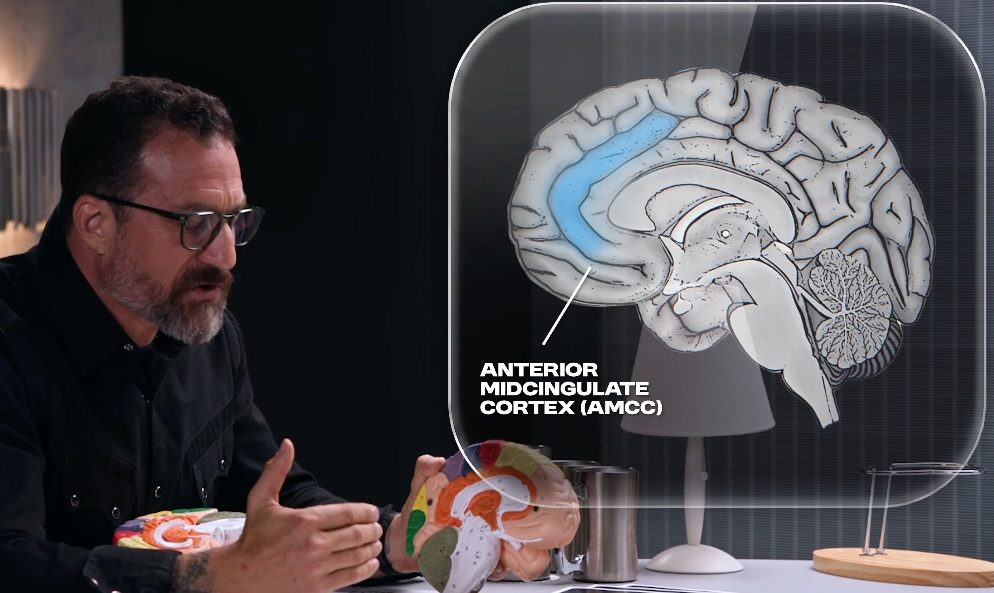
We have covered this as well in a previous episode but the Anterior Midcingulate Cortex (AMCC) in the brain, works like a muscle. When the AMCC is stimulated, people feel that a challenge is coming on. When you keep procrastinating and taking the comfortable route, it gets less stimulation = atrophy. However, the beautiful thing is that much of the brain is plastic. Neuroplasticity, which we are all familiar by now, suggests that the brain can adapt and change by forming new connections between nerve cells, allowing animals to learn new skills and develop new habits. (Hey, hence this website, I am pushing myself each week to write a post)
This means you have to push your brain, you have to train it, and do it consistently. Learn a new skill. Play Chess or Go. Pick up a new language. Or if you are avoiding work that you find uncomfortable, start to do it now. If you are avoiding the diet to achieve the body shape you want, work on it now. Studies have shown that people who successfully achieve their diet and exercise program, their AMCC gets bigger and more active. When you do something you don't reflexively do, your AMCC gets better.
The key is that it has a compounding effect. It could be the house chores or the writing, or the bringing your dog out, or just going out for a work. Each time you challenge your AMCC, it will compound to other effects of your life. With that your willpower becomes stronger in every aspect of your life.
8 - Evening Light Restriction: Avoid bright LED lights and screens after 6:00 PM to protect sleep and melatonin levels.
Nothing much on this really. We already know this. It's a real reminder.
Simple trick you could do is to setup a shortcut on your phone so it goes into 'red light' mode.
9 - Glymphatic Sleep Clearance: Prioritize optimal sleep environments and side-sleeping to flush metabolic waste out of the brain.
Ok, for this section, let's start on an unrelated topic because there's a thing called Paradoxical kinesia. It's the sudden, and transient ability of people with Parkinson's disease to perform tasks they could not previously execute in threat, reward or urgent circumstances. Kids with severe ADHD, can focus for hours on games they are interested in. It suggests that there's a different neural pathway to perform motor functions.
Back to sleep health. If you look at yourself after a bad's night sleep, it is evident in your face. We look like crap with all the puffiness. This is because your lymphatic system is not cleared. Good sleep is essential for offsetting dementia.
Sleeping on the side, with your head slightly elevated helps. During sleep, in the brain, the space between your cells slightly opens up, and it's a wild thing that all the toxins get pushed out. Some of it comes out through your nose too.
A short meditation, 20 minutes, can help with glympathic clearance as well.
After a good night of sleep, wake up, 10 breaths of meditation. Get out of bed, pee/shit, then reach out for the sun.
10 - Non-Sleep Deep Rest (NSDR): Practice NSDR or lateral eye movements to rapidly calm the nervous system and recover lost sleep.
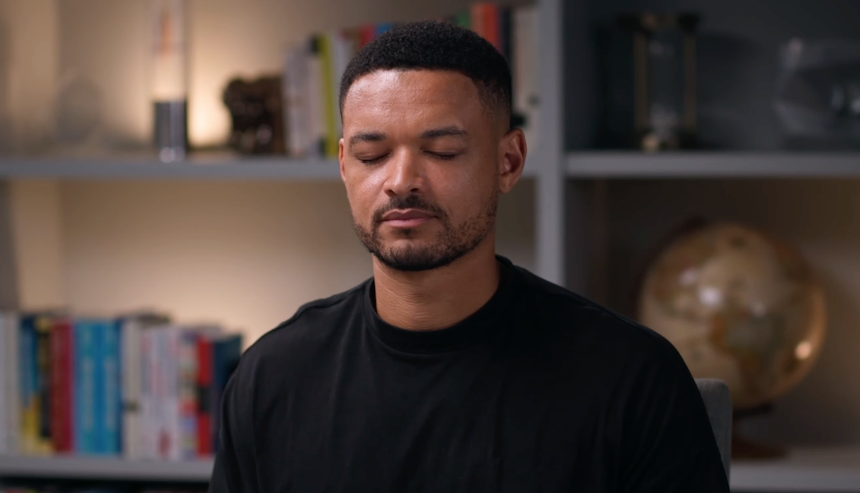
This feels like a game cheat code. So apparently, if you do a certain sequence of eye movement with your eye closed, generally, you will have a great night sleep.
Before you sleep on your bed, close your eyes then:
Move one side, then to other side. Up, down. Counter-clockwise in a circle. Clockwise in a circle. Point your eyes towards your nostrils (not cross it), do a long exhale.
Do 2-3 times. When you wake up next morning, you will be "wow".
Side note on peptides and biohacking and religion and other lifehacks
Pinealon - synthetic short peptide. Promotes REM sleep. Stimulates pineal gland. Putting it here for further study. Same for microdosing Retatrudide and Tirzepatide. GLP-1 is found throughout the body, which is why high dose GLP-1 agonist can cause vision loss. Growth hormones secretagogues. Epitalon. Tesamorelin. Ipamorelin. CJC-1295 . Ways to reduce visceral fats and improve longevity. BPC-157 for injury recovery but can vascularise tumors. Guess what? There won't be RCTs (randomised controlled trials) for all these because it's bad for business.
James Hollins on how to attain a good life. Guy has written a good book called Under Saturn's Shadow on the wounding and healing on trauma of men. Rumination comes with stress. Psychological stressors tend to bang around in the brain alot. Three things you got to do everyday. 1) Shut Up. There's always someone suffering more than you. Have to have gratitude. 2) Suit Up. Can't do anything in life unless you prepare. 3) Show Up. Happy people fulfil outward roles. And finally, once a day, get out of role fulfilment. Don't try to accomplish anything. Let your unconscious mind feed you information.
There's alot of things to remember for this podcast. But Andrew is against over-optimising. He says this as striving as a form of within struggle. The struggle is also the release from struggle. Kind of a paradoxical truth to life. I agree.
Also, Andrew believes in God. Hasn't missed a night of prayer in 3 years. Our understanding of the world is an abstraction of the photons coming into our eyes. Sound waves through your ears. Mechanical forces that hit your skin. Chemicals in your nose and mouth. What a beautiful, logical way to say it.
So God, help me not in removing the pain from my life but help me in having the energy to fight the pain. Help me in moving my own ego out of the room so I can learn and be humble, have humility, and share information with the world.
Source | Andrew Huberman: My Exact Routine To Optimize Brain & Body, I Do All Of These Every Day!