China's growth story, up till 2020s anyway
John Harris, (special thanks to Bruce Dickson, Andrew Fedorov, Max Fisher, Lynette Ong, Victor Shih, Dan Wang, et al) breaks down the growth of China in simpler terms.
Many of us have been to China by now. For those who have not, and are living in the western hemisphere, you would have also seen many videos of Tiktokers, youtubers etc., proclaiming just how advanced and vast China has become.
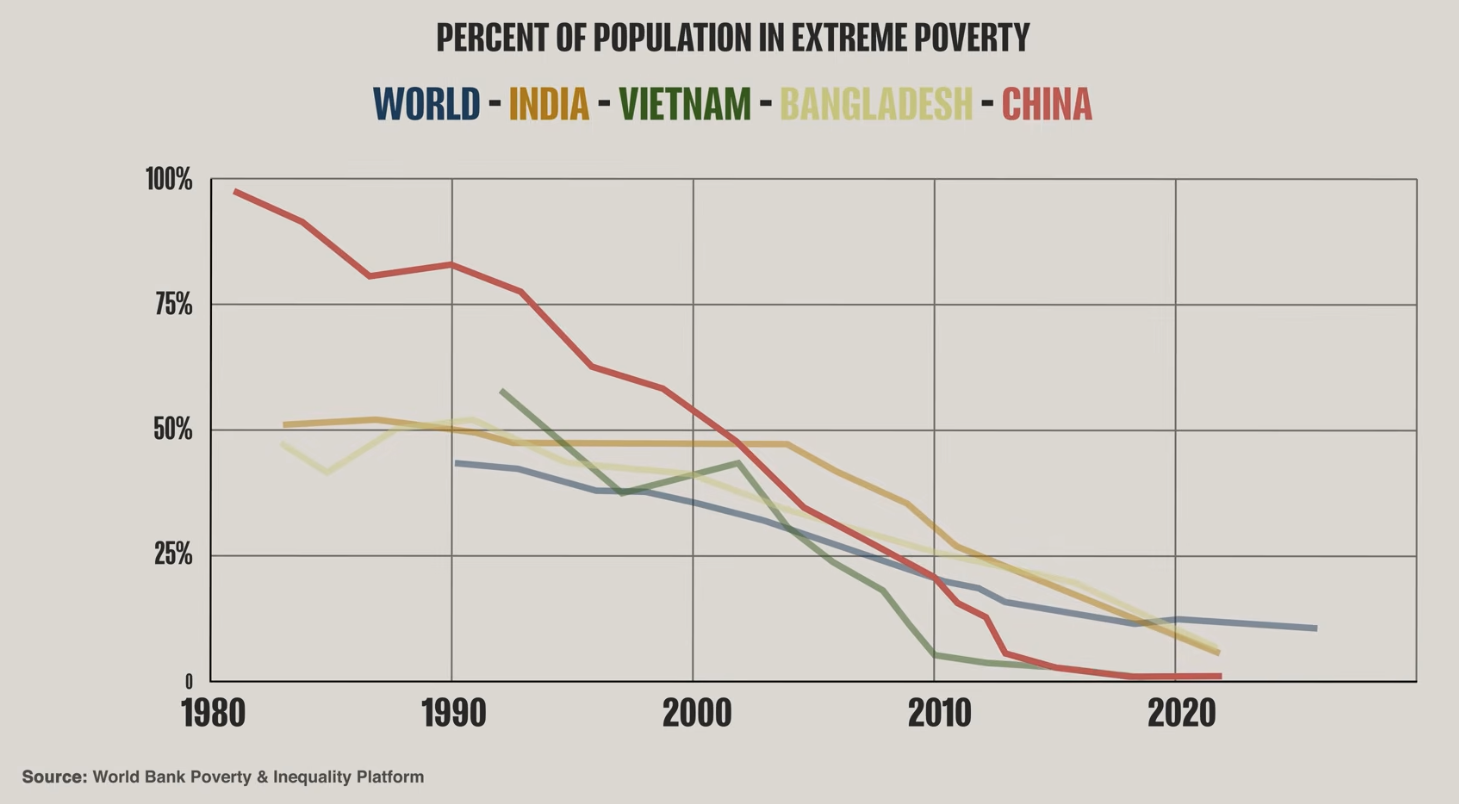
The video starts by positing that China's need for growth comes from its extreme poverty, especially when compared to other countries, specifically India, Vietnam and Bangladesh. Almost 100% (a hundred percent) of China is of extreme poverty in 1980s? I found that rather alarming.
China = dictatorship = success? Hang on, not so fast.
The answer lies in China's flag. In the 1940s, the 4 smaller stars represents the four social classes (working class 工人阶级, peasantry 农民阶级, urban small bourgeoisie 城市小资产阶级, and national bourgeoisie 民族资产阶级), and they are tilted ever so slightly towards the big star, which represents the Chinese Communist Party (CCP).
Note: The bourgeoisie (own the means of production) and the proletariat (salaried laborers) are the two primary social classes in Marxist theory, defined by their relationship to the means of production (the factories, land, and technology used to create goods)
Note 2: the word bourgeoisie is a mouthful. The most direct terms would be capitalist or the ruling class.
The beginnings of technocracy - individual governmental recognition and incentive
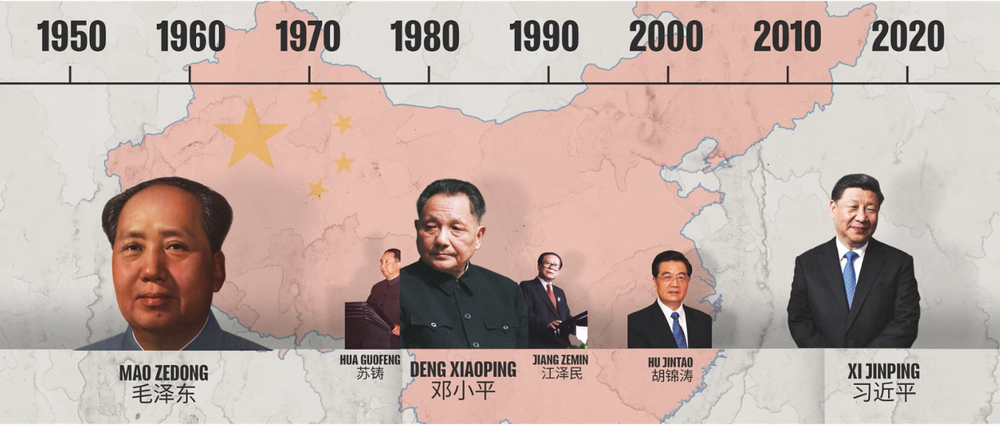
The concept of Modest Prosperity, 小康, was brought up. At the time of Mao Zedong's death (1976), China was in poverty, economically and politically. Deng Xiaoping (1904 - 1997), took over. He's recognised as the opposite of Mao, very pragmatic guy and very pro party. He saw that China's poverty is a threat to the communist party. So in a very weird way, in order to protect the party, he had to make China prosperous.
Mao and his party introduced the concept of revolutionary credentials, but it was all centred around himself.
Revolutionary Credentials = depth of commitment to ideology + loyalty to the party
Deng decentralised Mao's concept. He wants talent to decentralise and promote through the ranks. Technocratic governance.
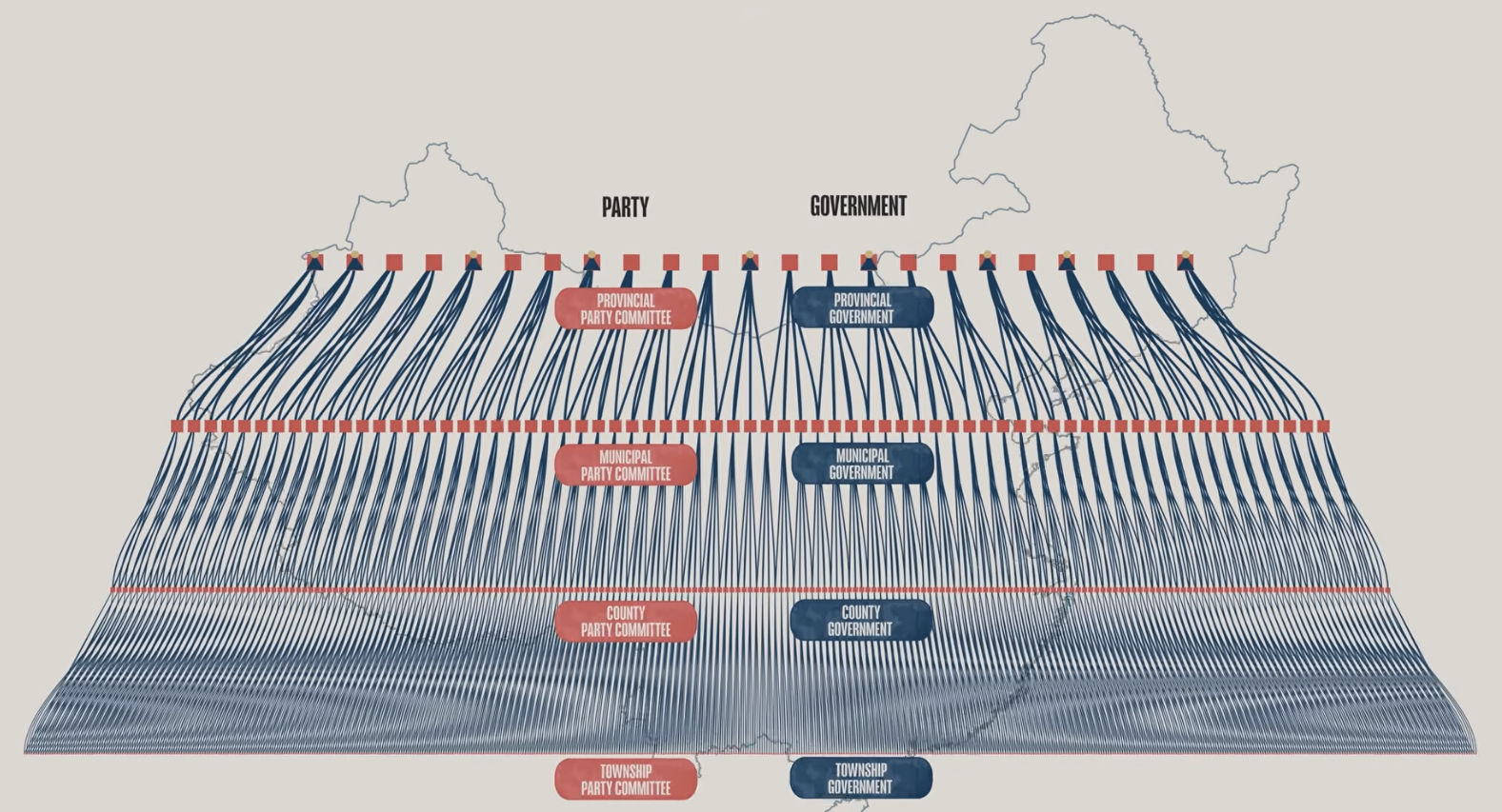
Their key task: economy development. Every government official is graded, with economic score the highest. When you have such an environment that is so highly competitive in billions of people, you will get the cream of the crop, finding super creative ways to stimulate the economy.
Local government incentive: Special Economic Zones and Decentralised Tax structure
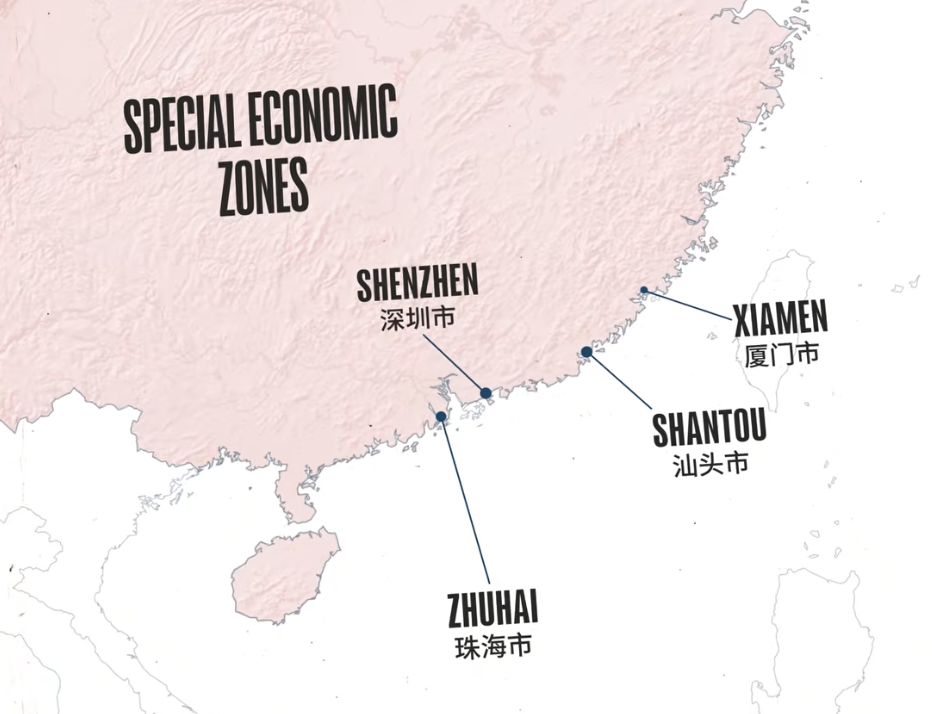
Deng's government also created special zones, which are basically sandbox environments that allow talents to play and try out new things. This is where private companies were able to come in and invest in a free market.
Deng also changes how the country's finances work. In Mao's era, all revenues get sent back to Beijing, the central government. The money is then distributed in fixed, flat budgets. Deng made it such that local governments need only give a certain taxed amount, the rest they can keep for themselves.
This kicks off the second phase, the first phase being individuals technocracy, and now local, rural governments, localised, can act to their maximum. These two incentive changes, quickly industrialised China.
But Beijing, central government, quickly realised too much money is left on the street. They turned it back to a more centralised model with some loopholes, also known as the 1994 tax reform. Those loopholes, the local governments quickly found a way - through land development of village-owned land. It's complicated, but basically local government buy village owned land, develop it, then can now lease it for much higher rent and tax revenues. This created its own term, called tudi caizheng, 土地财政, or land finance (described in this paper in detail).
This is different from normal economic development, because the demand is primarily not driven by local needs, aka people needing new houses or new infrastructure. It is driven by the incentive of the act of building itself.
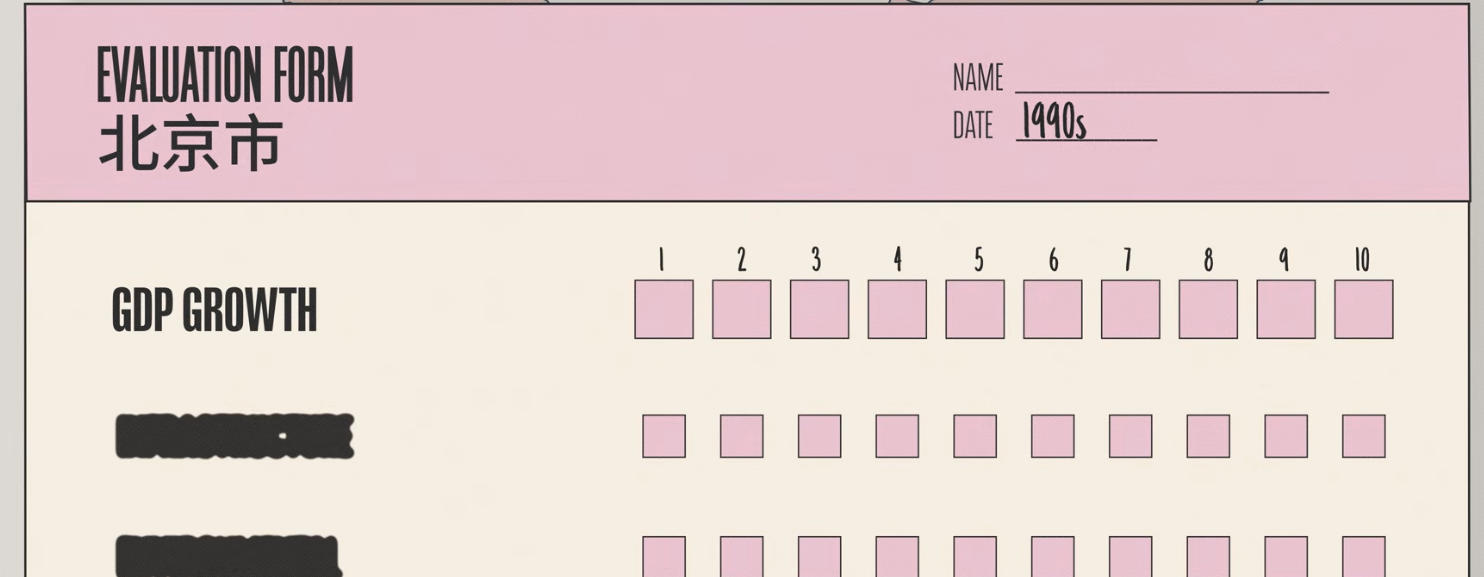
GDP Growth as the hard target
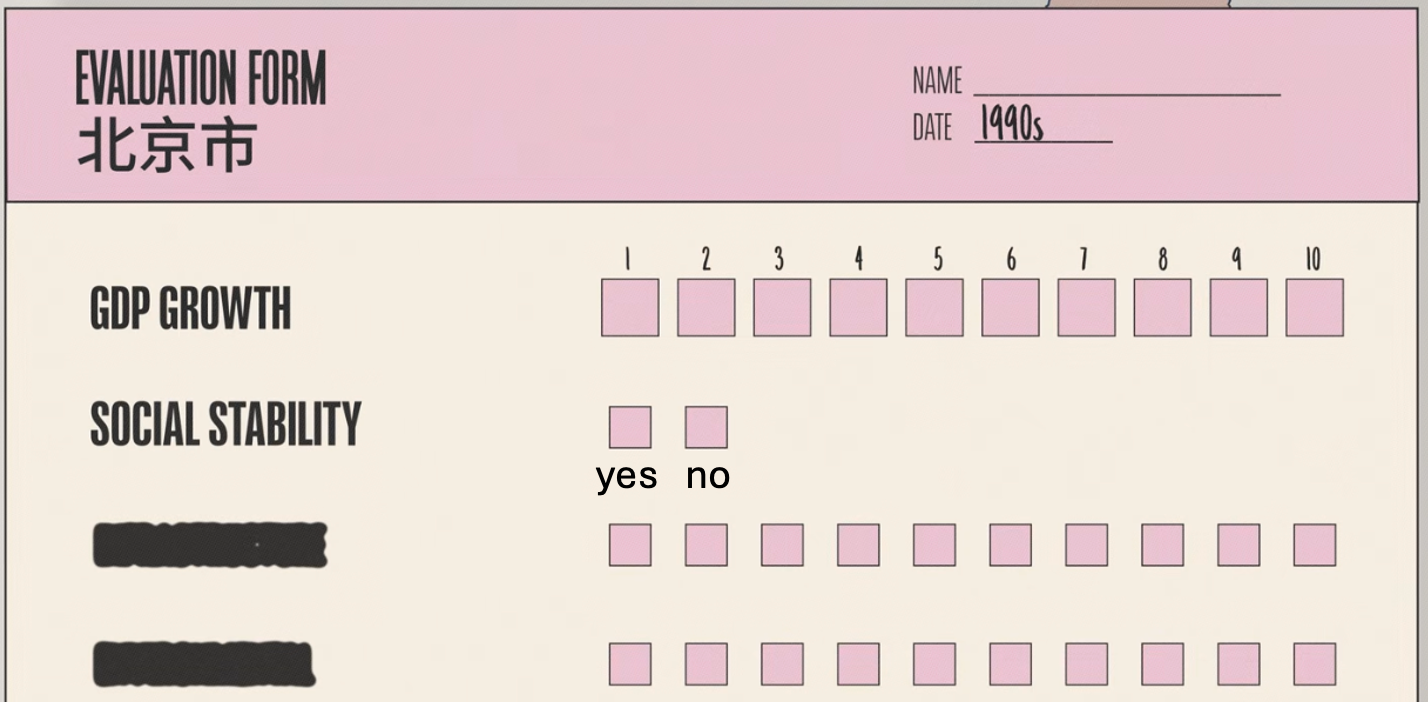
Providing healthcare, better education, cleaning up the environment - all good to have, but insufficient to get promoted. The economy must grow as a hard target in all the government officials evaluation forms.
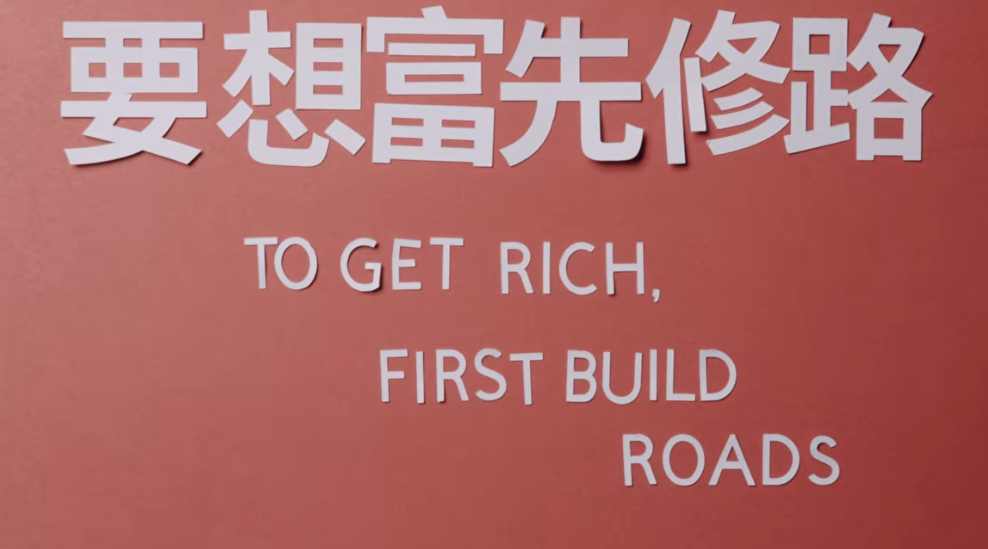
Real estate development also has one important use - ostentatious flaunting of success to your superiors.
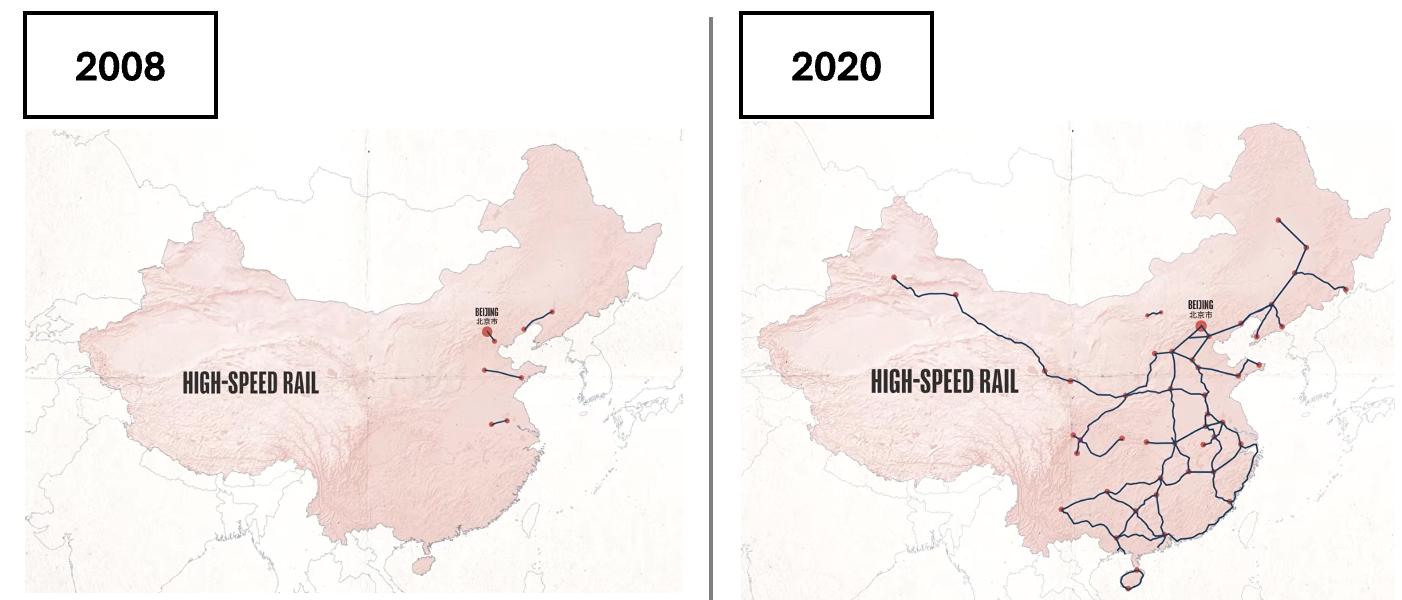
A super recursive effect of land development happened, because the special economic zones, the infrastructure incentives, the creative minds of the beehive - created this mass of high speed connections that just happen.
Alas.. all these created.. Ghost Cities. Funny how this post comes about during the Halloween period.
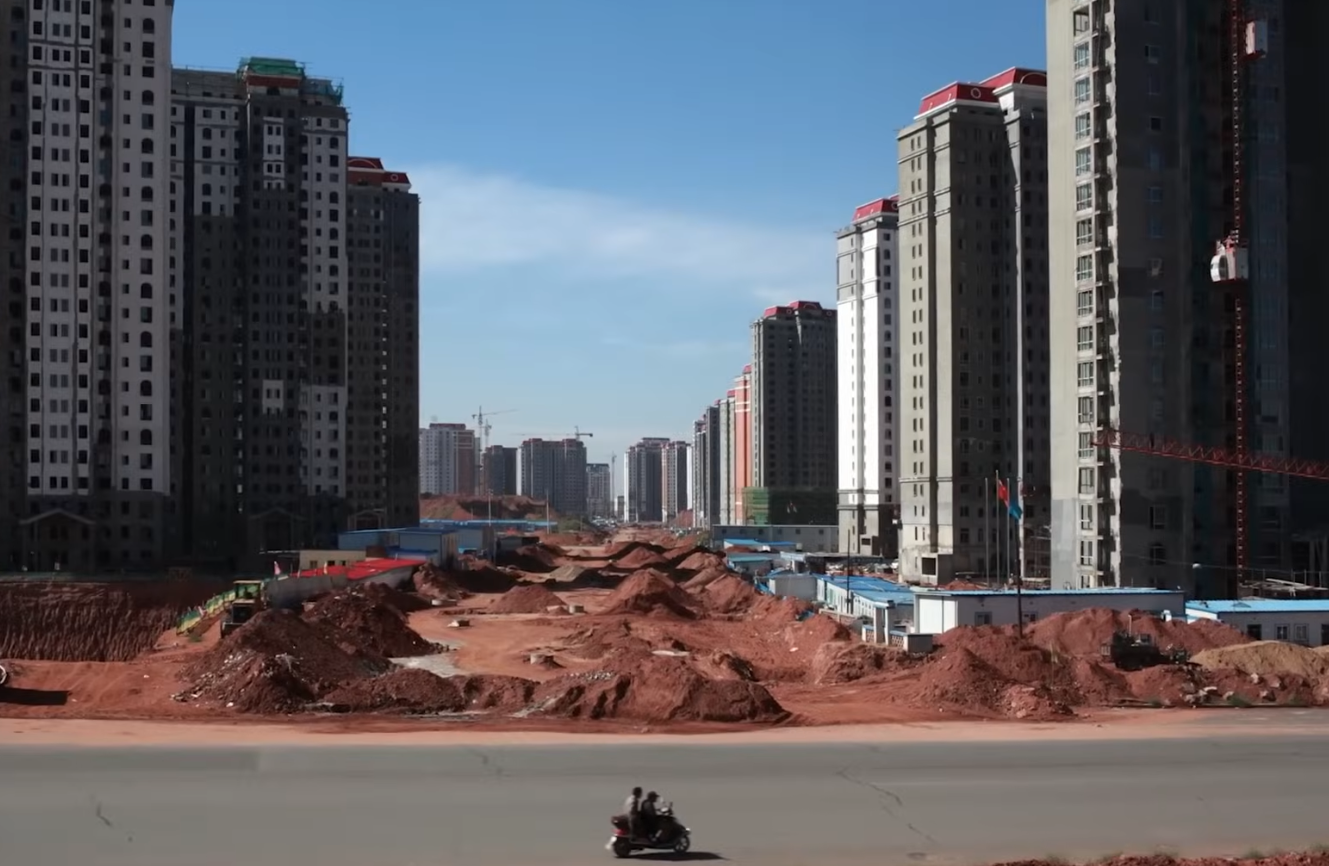
Actually though, it does become populated. It did time, but people did move in later after some of these documentaries got taken.
躺平 - lying flat, or the act of give up
Eventually, China's GDP has to slow down, which happened around 2010. What we see on the internet, is usually only the good stuff. The big tall sky scapers. The super luscious landscape. Yet with so much competition, stress, and the unlimited burden of unlimited growth, young people are starting to burn out. They lie down (hence the word tang ping), and disengage.
In other words, quiet quitting.
This concept, unfortunately, was not explored further in the podcast.
Stability becomes the key and only core score card
In the 1980s, an important growing concern was that Russia (the Soviet Union) was falling apart. The growing middle class too, were making riots and protests in Beijing.
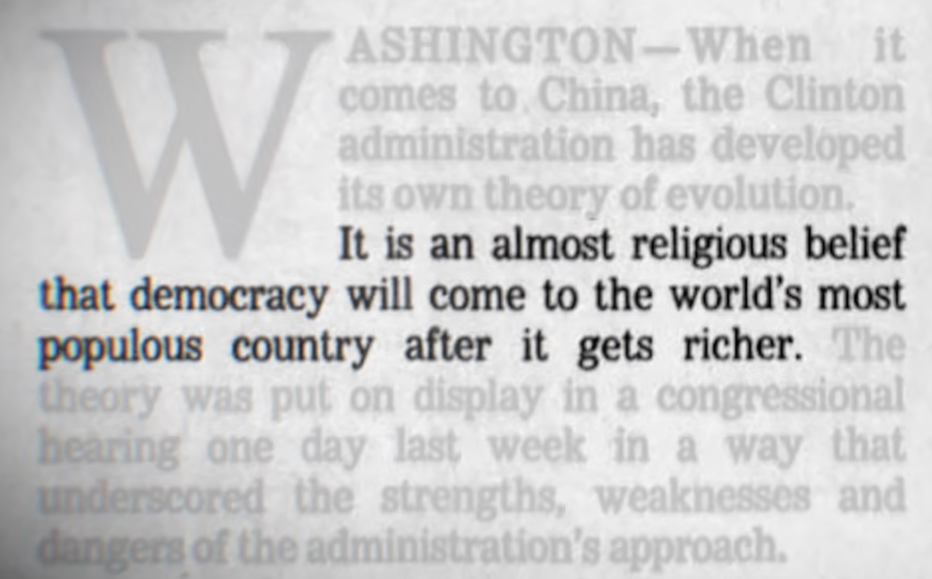
And so after GDP growth, another important score card was there. But it was a Yes/No answer.
Going back to the original premise - when land needs to be developed, it also means you need to evict people. Evicting people means protests. The chinese style of repression - is known as 'under your skin'.
- hire gangsters that are not affiliated with the party to kick out tenants
- retirees that believe in the CCP's values to convince the tenants that they are selfish and outcasts
China citizens are all aware that these things happen. It does not affect quite enough people that it becomes a problem, but people outside don't exactly see it. And guess what - as you know it, the social credit score gets implemented as well as the social security state gets more and more advanced.
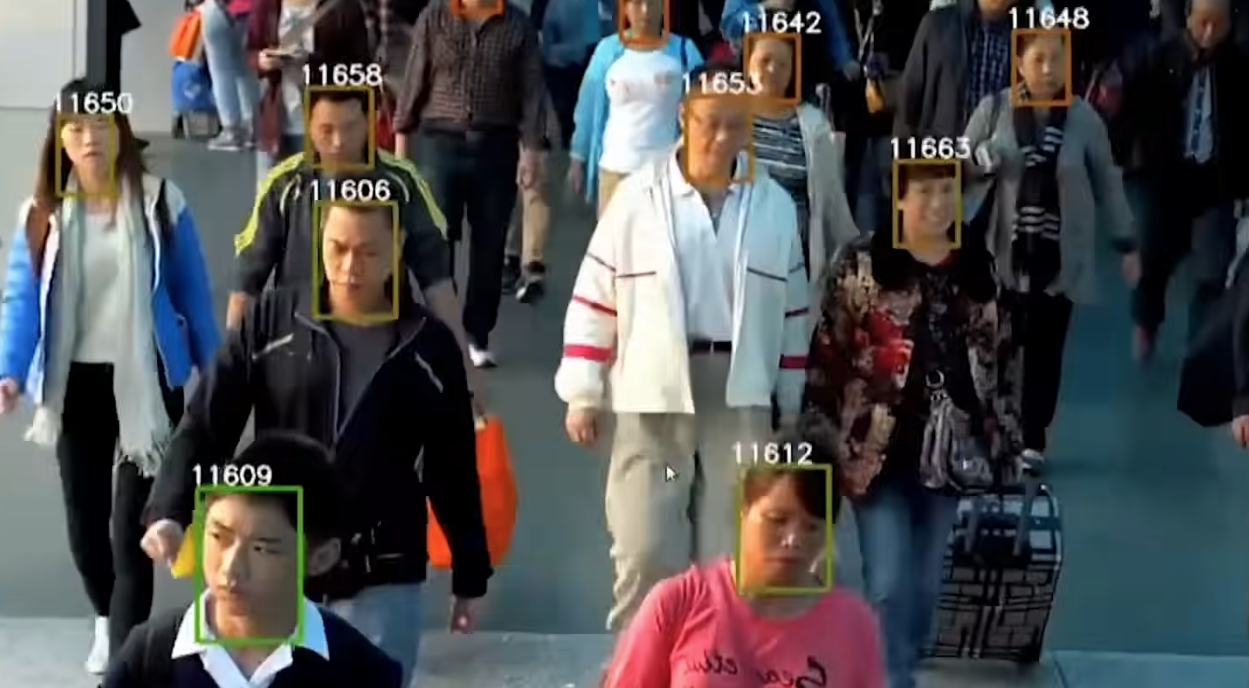
Under Xi Jinping's leadership, the number of security cameras in the country grew from just under 30 million CCTVs in 2013 to more than 200 million in 2019. This man is obsessed with social security. Social security becomes #1 on the evaluation forms.
The party delivers growth, prosperity and security and in return, the people do not get to choose who governs them.
Would you be happy in such a country?
Source | The REAL reason China built so much